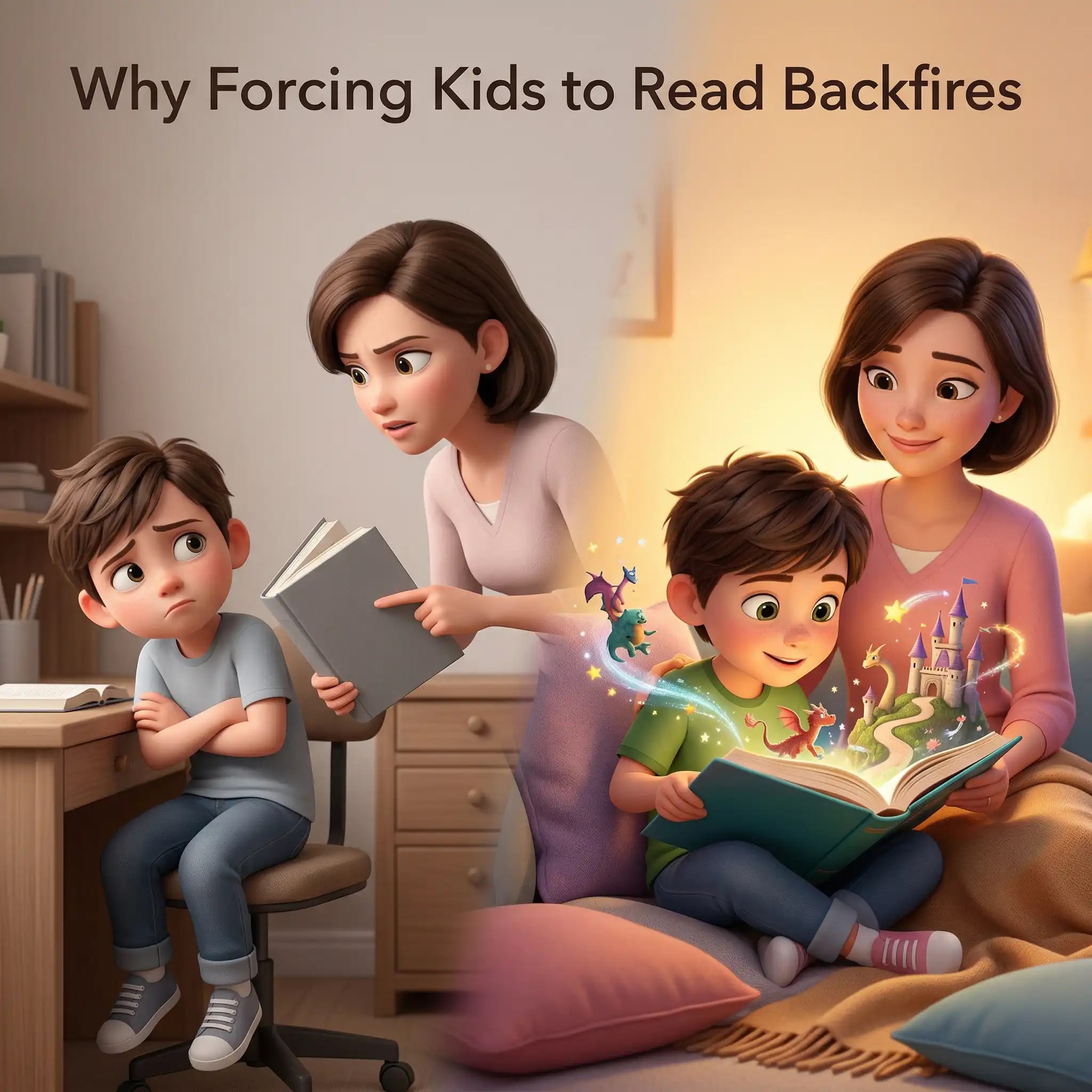
What to Do Instead: The Pressure-Free Approach
If you want to raise a child who genuinely loves to read, you have to take the pressure off and change the environment. Here is how to rebuild their motivation naturally.
1. Call a "Reading Ceasefire" If books have become a battleground, the very first step is to stop fighting. Take a week off from mandatory independent reading. Remove the timers, the logs, and the ultimatums. Give their brain a chance to lower its defenses and stop associating books with conflict.
2. Outsource to a 1-on-1 Reading Mentor Particularly for children in the 6-to-12-year-old range, the parent-child dynamic can carry too much emotional weight. Children want to please you, and when they struggle to read, they feel like they are failing you. This pressure causes them to push back.
Instead of acting as the homework police, connect them with a 1-on-1 reading mentor. Pairing a child with a bright, enthusiastic college student changes the entire paradigm. A mentor isn't an authority figure issuing commands; they are a cool, older peer. Through relaxed, conversational 1-on-1 sessions, a mentor can help a child tackle tough vocabulary and discover amazing stories without the emotional friction of a parent hovering over them. It turns reading into a highly engaging social connection.
3. Let Them Read "Junk Food" When we force kids to read, we often force them to read what we think is valuable (like award-winning historical fiction). If they hate the subject, they will hate the reading.
Hand the control over to them. If they only want to read graphic novels, comic books, video game manuals, or joke books, let them. Graphic novels are brilliant for reluctant readers because the illustrations provide a dopamine hit that keeps them turning pages while still requiring them to decode text.
4. Practice "Strewing" Instead of demanding they read, make reading irresistible and highly accessible. "Strew" visually appealing, high-interest books in places where they naturally get bored. Put a stack of comic books on the coffee table. Leave a magazine about their favorite sport on the kitchen island. Make the books easier to reach than the TV remote, and let their natural curiosity do the heavy lifting.