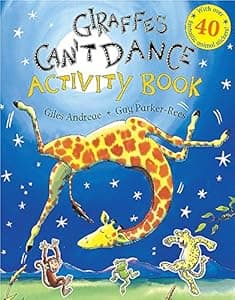
Age rating and parents' guide:Giraffes Can't Dance
by Giles Andreae
Ages 6–8
Giraffes Can't Dance by Giles Andreae is best for children aged 6–8. It has no violence, nothing scary, no romance and no bad language.
Gerald the giraffe longs to join in the annual Jungle Dance, but his crooked knees and thin legs make him clumsy. When the other animals laugh and tease him, Gerald walks off feeling sad and alone. Offers space for thoughtful conversations about empathy and difficult choices.
Content ratings
How much of each a parent can expect, from none to strong.
- Violence
- None
- Scary moments
- None
- Romance
- None
- Bad language
- None

Content checked by Dhiraj Bodade, co-founder of Bookstaken, on .
At a glance
- Picture book
- Easy to get into from the first page
- Plenty of illustrations
- Emotionally light
- A good pick for reluctant readers
Great for kids who like
- Sports
- Music & dance
Reading mood
- Playful
Good to talk about
- Sports
Books like Giraffes Can't Dance
Similar stories for the same ages, none more intense than this one should be for its youngest readers.
Ages 6–8
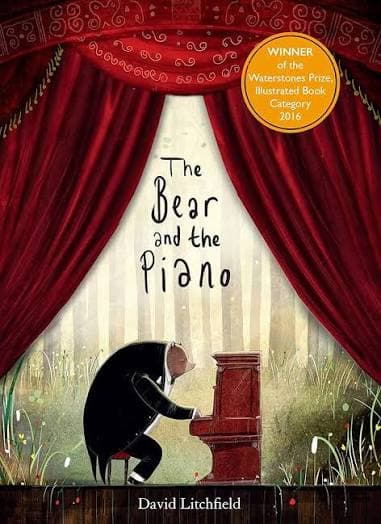
The Bear and the Piano
by David Litchfield
When a curious young bear discovers a strange object in the forest, he slowly teaches himself to play beautiful music on its keys. His talent eventually takes him far away to the bright lights of the big city, where he finds fame, applause, and huge crowds. A playful spark for creativity and storytelling beyond the page.
Ages 6–8
Because
by Mo Willems
This uplifting picture book follows the domino effect of creativity, showing how a series of small, interconnected events and choices leads a young girl to a symphony concert. Captivated by what she hears, she is inspired to study hard and create her own music, continuing the chain of creativity for others. A playful spark for creativity and storytelling beyond the page.
Ages 6–8
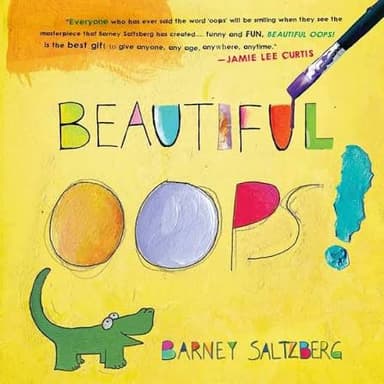
Beautiful Oops!
by Barney Saltzberg
This playful, interactive picture book demonstrates how accidents and blunders can spark wonderful new ideas. Through clever pop-ups, fold-outs, torn edges, and paint spills, Barney Saltzberg shows young readers that a spill can become an animal or a rip can become an alligator's mouth.
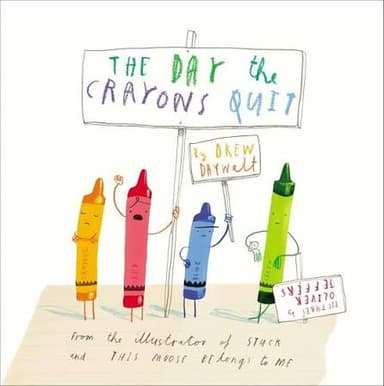
Ages 6–8
The Day the Crayons Quit
by Drew Daywalt
When Duncan opens his crayon box, he finds a stack of letters instead. Each crayon has a humorous grievance: Blue is worn down from coloring endless oceans, Red needs a break from fire engines, Peach is embarrassed to be peeled, and Yellow and Orange aren't speaking over who is the true color of the sun. Invites children to imagine, create, and share ideas of their own.
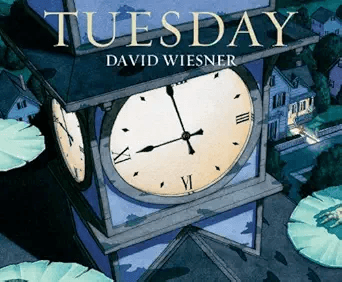
Ages 6–8
Tuesday
by David Wiesner
On an ordinary Tuesday evening around eight o'clock, frogs suddenly lift off from their pond on floating lily pads. They soar silently through the night air, exploring a sleeping suburban neighborhood, zooming past laundry lines, and sneaking into living rooms to watch television. Encourages creative confidence and plenty of imaginative conversation.
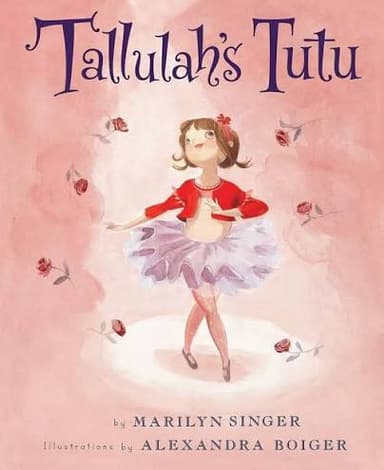
Ages 6–8
Tallulah's Tutu
by Marilyn Singer
Tallulah wants nothing more than to wear a tutu, so she joins ballet class expecting to get one straight away. To her disappointment, tutus are not handed out to beginners; they have to be earned through practice and hard work. Offers an encouraging look at practice, persistence, and following interests.
A good book is the start. A mentor makes it stick.
In a free 1:1 session, a trained Bookstaken mentor reads with your child, asks what they think and helps the reading habit last.