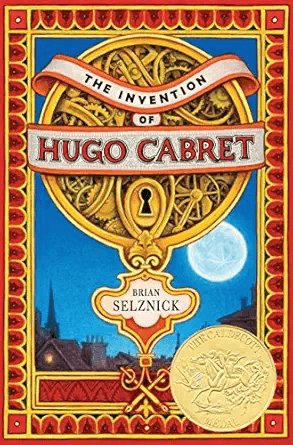
Age rating and parents' guide:The Invention of Hugo Cabret
by Brian Selznick
Ages 9–14
The Invention of Hugo Cabret by Brian Selznick is best for children aged 9–14. It has no violence, a few mildly scary moments, no romance and no bad language. Worth knowing: Orphan hardship.
Orphaned Hugo lives hidden inside the walls of a busy 1930s Paris railway station, secretly winding the massive clocks and surviving on stolen food. His most precious possession is a broken mechanical man left by his late father, which he desperately tries to repair. When an eccentric toy shop owner catches him stealing spare parts, Hugo is drawn into a captivating mystery tied to early cinema. Blending rich prose with cinematic pencil illustrations that drive the story forward, it is a uniquely visual and moving reading experience.
Content ratings
How much of each a parent can expect, from none to strong.
- Violence
- None
- Scary moments
- Mild
- Romance
- None
- Bad language
- None
Worth knowing: Orphan hardship

Content checked by Dhiraj Bodade, co-founder of Bookstaken, on .
At a glance
- Novel
- A steady start that picks up quickly
- Mostly text
- Emotionally light
- A good pick for reluctant readers
Great for kids who like
- Science
- Robots & inventions
Reading mood
- Curious
Good to talk about
- Science
- Robots & inventions
Books like The Invention of Hugo Cabret
Similar stories for the same ages, none more intense than this one should be for its youngest readers.
Ages 9–14
The Way Things Work Now
by David Macaulay
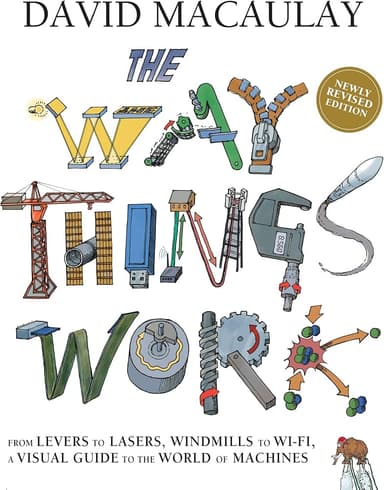
Packed with intricate cutaway diagrams, this classic guide explores the inner workings of everyday machines and modern technology. David Macaulay breaks down complex mechanical and digital principles—from simple levers and gears to smartphones and 3D printers—using clear explanations and whimsical woolly mammoths to demonstrate how forces operate. Inquisitive readers love the visual humor and detailed illustrations, making it easy to dip into for quick discoveries or study closely for hours.
Ages 12–14
Women in Science
by Rachel Ignotofsky
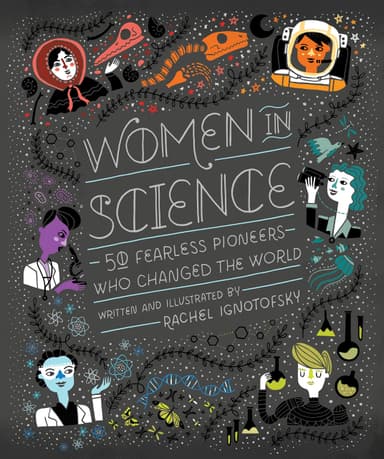
This visually charming book highlights fifty trailblazing women in STEM, ranging from ancient philosophers to modern astronauts and geneticists. Each spread features a stylized portrait, an inspiring biography, and playful infographics detailing scientific concepts and achievements. Children appreciate the engaging graphic design and accessible, bite-sized facts that make history and complex discoveries fun to explore at their own pace.
Ages 9–14
Number the Stars
by Lois Lowry
In Copenhagen during World War II, ten-year-old Annemarie Johansen watches as Nazi forces begin to target the city's Jewish population. When the danger reaches her best friend, Ellen Rosen, Annemarie's family steps in to hide Ellen as their own daughter. Soon, the Johansens must take brave risks to help Ellen and other families escape across the sea to Sweden. It is a tense yet gentle historical story that introduces younger readers to the courage of ordinary people resisting injustice.
Ages 9–11
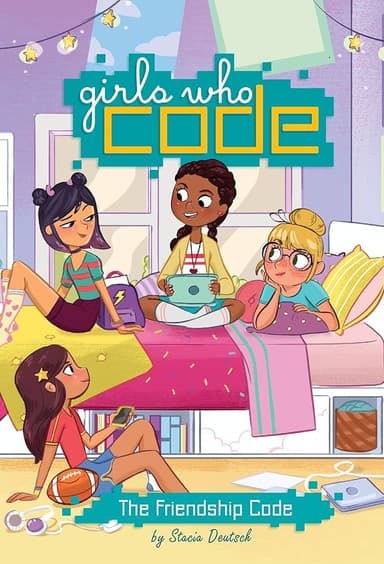
Girls Who Code: The Friendship Code
by Stacia Deutsch
Lucy is eager to start middle school and join the new coding club. Instead of working solo right away, she is grouped with three very different girls who struggle to connect. When mysterious, coded notes start appearing, the group must learn basic programming concepts and work together to crack the puzzle. It is an engaging, relatable story about navigating new friendships, learning from mistakes, and discovering the creative side of technology.
Ages 9–14
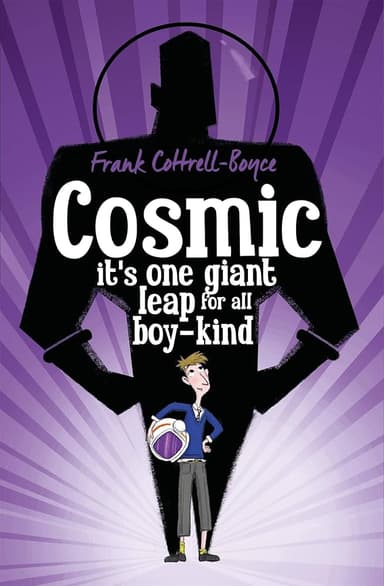
Cosmic
by Frank Cottrell Boyce
Twelve-year-old Liam is unusually tall for his age, often mistaken for a grown-up. When he enters a competition to test a brand-new thrill ride in China, he poses as an adult chaperone and ends up accidentally launched into orbit alongside four real children. Floating through space with only a manual and his wits, Liam has to learn what being a responsible adult truly means. Full of brilliant humour and genuine warmth, this space adventure explores fatherhood, growing up, and the gap between looking old and being mature.
Ages 9–14
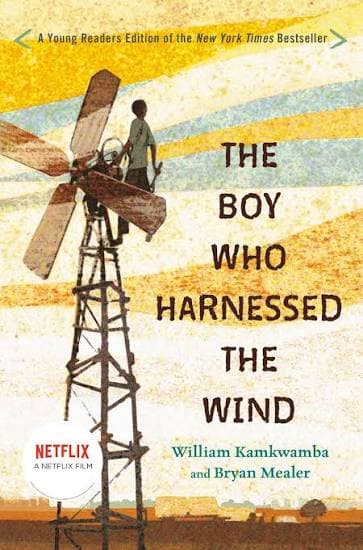
The Boy Who Harnessed the Wind (Young Readers Edition)
by William Kamkwamba & Bryan Mealer
When a terrible drought strikes his village in Malawi, fourteen-year-old William Kamkwamba's family can no longer afford his school fees. Refusing to give up on learning, he visits the local library and discovers how electricity works. Using old bicycle parts, scrap metal, and sheer determination, he sets out to build a windmill that can bring light and water to his community. This inspiring true story shows how curiosity and resourcefulness can overcome hardship and change lives.
A good book is the start. A mentor makes it stick.
In a free 1:1 session, a trained Bookstaken mentor reads with your child, asks what they think and helps the reading habit last.