How Reading Inspires Children to Create Their Own Stories
Reading sparks imagination and helps kids learn story structure. Discover simple ways to turn young readers into confident storytellers and creative writers.

The Magical Moment When Children Want to Create Their Own Stories
Many parents notice a fascinating moment in a child’s reading journey.
At first, children simply enjoy listening to stories.
Later, they begin reading stories on their own.
But eventually something even more interesting happens.
Children begin saying things like:
- “What if the dragon had a different ending?”
- “I want to create my own superhero.”
- “Can I write my own story?”
This moment is incredibly important.
It signals that reading has transformed from passive entertainment into active imagination.
Psychologist Jerome Bruner argued that stories are one of the main ways people make sense of their world (Bruner, 1990). When children tell their own, they practise creativity, language and shaping their ideas.
When children begin creating their own stories, they are not just playing.
They are learning how to think, imagine, and express ideas.
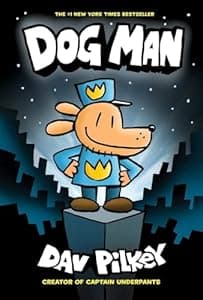
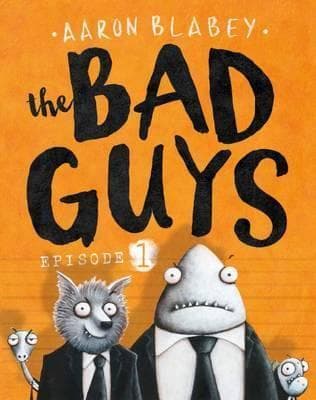
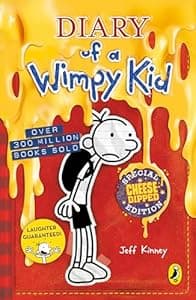
How Reading Sparks Creative Thinking
Stories introduce children to worlds filled with characters, challenges, and possibilities.
While reading, children naturally imagine:
- different endings
- new characters
- alternate adventures
Psychologists describe this process as mental simulation, where readers imagine scenarios beyond their direct experience (Mar & Oatley, 2008).
This kind of imagining is good practice for creativity.
When children later create stories of their own, they draw inspiration from the imaginative worlds they have encountered in books.
For example:
A child who reads fantasy may imagine magical kingdoms.
A child who reads mysteries may invent clever puzzles.
A child who reads adventure stories may imagine exciting journeys.
Reading becomes the foundation for creative expression.
Stories Teach Children How Narratives Work
Children who read frequently begin to understand how stories are structured.
They learn that most stories include:
- characters with goals
- obstacles or conflicts
- exciting turning points
- satisfying resolutions
Researchers find that children's understanding of how stories work, or narrative comprehension, grows steadily in the early school years and goes hand in hand with reading comprehension (Paris & Paris, 2003).
This understanding allows children to construct their own stories more easily.
Without formal instruction, children begin to recognize how storytelling works.
Imagination Is a Skill That Can Grow
Imagination is often thought of as something children naturally possess.
However, imagination also develops through experience.
Stories expand the range of possibilities children can imagine.
Through books, children encounter:
- magical creatures
- distant planets
- mysterious puzzles
- brave heroes
- unexpected friendships
These experiences stretch the imagination.
Every book adds to the store of characters, settings and plot twists a child can borrow and remix.
The more stories children explore, the more ideas they gain for creating their own.
Storytelling Builds Confidence
Creating stories allows children to express their thoughts and ideas freely.
When children invent characters or adventures, they experience the joy of creative ownership.
They are not simply repeating information.
They are generating something new.
Psychologists find that children are most motivated by activities they choose and feel ownership of (Ryan & Deci, 2000).
Children feel proud when they create something uniquely their own.
This confidence encourages further exploration and learning.
Storytelling Strengthens Language Skills
Writing stories requires children to organize their thoughts and communicate ideas clearly.
Storytelling activities help develop:
- vocabulary
- sentence construction
- narrative flow
- expressive language
Reading and writing draw on the same knowledge of words, sentences and stories, so practising one helps the other (Shanahan, 2006).
When children invent stories, they practice transforming imagination into words.
This process improves both speaking and writing abilities.
Want a mentor to help with this?
- Talks through a story
- Writes their own story
- Your report on WhatsApp
Encouraging Children to Create Stories
Parents can nurture storytelling by providing opportunities for creative expression.
Simple activities can make storytelling exciting.
For example:
- asking children to invent alternate endings to books
- encouraging them to draw characters from stories
- creating bedtime stories together
- inviting children to write short adventures
These activities help children see storytelling as a playful and imaginative activity rather than a school assignment.
Turning Readers Into Creators
Many children begin their journey as readers but eventually become creators.
When children write their own stories, they begin to see books differently.
They start noticing:
- how authors create suspense
- how characters change over time
- how dialogue reveals emotions
- how stories build toward a climax
This deeper understanding strengthens both reading and writing skills.
Children begin to appreciate stories not only as readers but also as storytellers.
Why Creativity Matters for the Future
Creative thinking is one of the most valuable skills children can develop.
Innovation in science, technology, business, and the arts all depend on the ability to imagine new ideas.
Creative activities give children practice in:
- problem-solving
- flexible thinking
- intellectual curiosity
Storytelling helps children practice imagining possibilities that do not yet exist.
These imaginative abilities can influence many aspects of future learning and creativity.
From Reading Stories to Writing Books
For many children, storytelling begins with small ideas.
A child might draw a character.
Then invent a short adventure.
Then write a few sentences describing the story.
Over time, these small creative steps can grow into something much larger.
The transition from reading stories to creating stories is one of the most powerful milestones in a child’s intellectual development.
It shows that the child is no longer just absorbing ideas.
They are contributing ideas of their own.
Final Thoughts
Reading opens the door to imagination.
Stories introduce children to new worlds, characters, and possibilities.
But the journey does not end with reading.
For many children, stories inspire something even more exciting — the desire to create.
When children begin inventing their own characters, adventures, and ideas, they discover the joy of storytelling.
And in that moment, reading transforms into creativity.
Books no longer exist only on the page.
They begin to live in the child’s imagination.
More guides on this topic: Focus and learning
Latest Articles
Similar Articles
Want Your Child to Experience Books More Deeply?
Bookstaken pairs kids with caring mentors who turn reading into engaging conversations, inspiring them to eventually write their own stories.
Responses
No responses yet. Be the first to share your thoughts.
Love books yourself? Get paid to read with kids as a Bookbuddy
