My Child Hates Writing: Why It Happens and What Helps
Why so many children groan at writing, seven things that help at home, and the signs that it's more than a dislike.
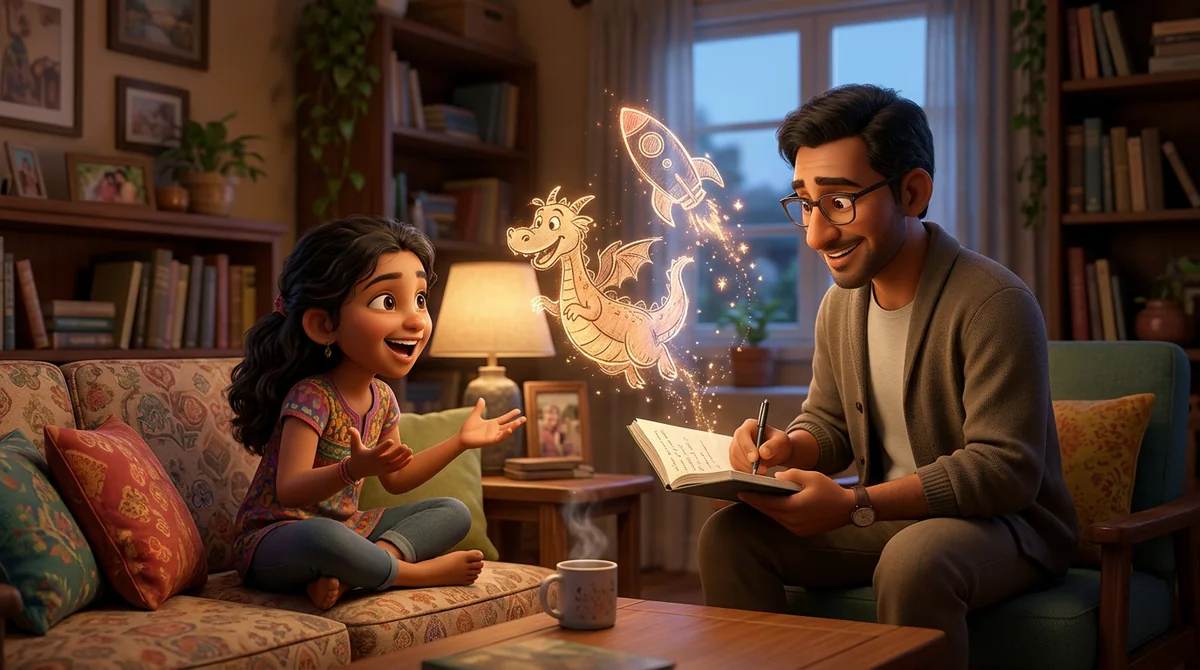
Most children who "hate writing" don't hate stories. They hate the hard parts all arriving at once: thinking of what to say, holding it in their head, spelling it, forming the letters and keeping it neat. Separate those jobs, keep tasks short, and give them something to write that matters to them, and writing usually gets easier.
You're not alone. In the UK, only about one in four children aged 8 to 18 said they enjoyed writing in their free time in 2025, the lowest level in fifteen years (National Literacy Trust).
Why children dislike writing
Too many jobs at once. Ideas, sentences, spelling and handwriting all compete for a young writer's attention. When the letters take effort, the ideas get lost.
Nothing to say. "Write about your holiday" is hard if the holiday was ordinary. A blank topic is harder than a blank page.
Red pen memories. If writing has mostly meant corrections, a child learns that writing is where they get things wrong.
It's always schoolwork. Worksheets and essays rarely have a reader who wants to know what happens next.
It's too long. A full page can look like a mountain to a seven-year-old.
If the blank page is the hard part, see story writing for kids for a four-line plan to start from.
What helps at home
- Split the thinking from the writing. Let them tell you the story first. For younger children, write down their words; for older ones, let them type a first draft.
- Go short. Three sentences, a postcard, a comic strip with speech bubbles. Finishing something small beats abandoning something big.
- Let them choose the topic. A story about their favourite game is still writing. Stuck for one? Try our free story ideas for kids, sorted by age and what your child loves.
- Give it a reader. A letter to a grandparent, a review of a book for a cousin, a story read aloud at dinner.
- Praise one specific thing. "That line about the dog made me laugh" teaches more than "good job".
- Leave spelling for later. Fix it together at the end, not mid-sentence.
- Read more, together. Children who read more tend to write better: they borrow words, sentence patterns and a feel for how stories work (Graham et al., 2018).
A journal that nobody marks is a gentle way back into writing. Try our journal prompts for kids, sorted by type.
When to ask a specialist
If handwriting stays very slow or painful, letters are hard to form well past age 7 or 8, or your child can tell a rich story but can't get any of it onto paper, talk to their teacher or an occupational therapist. These can be signs of a writing difficulty such as dysgraphia, which needs specialist support.
Want a mentor to help with this?
- Talks through a story
- Writes their own story
- Your report on WhatsApp
Talking it through first
In Bookstaken's 1:1 sessions, children talk through a real book with a college mentor, then write their own story, chapter by chapter, in their story journal. Talking it through first makes the blank page much less scary. Our guide on how to help your child write a book shows how a whole book comes together, one chapter at a time.
For children aged 6–14 who can already read. The first session is free.
Frequently asked questions
Why does my child refuse to write?
Usually because writing feels hard, not because they have nothing to say. Separate the ideas from the handwriting, keep it short, and let them choose the topic.
Is it normal for a child to hate writing?
Very common. In 2025 only about a quarter of UK children aged 8 to 18 said they enjoyed writing in their free time.
When is it more than a dislike?
If forming letters stays very slow or painful, or there's a big gap between what they can say and what they can write, ask their teacher or an occupational therapist about an assessment.
Sources
- National Literacy Trust (2025). Children and young people's writing in 2025.
- Graham, S. et al. (2018). Reading for writing: A meta-analysis of the impact of reading interventions on writing. Review of Educational Research.
- Graham, S. et al. (2012). Teaching Elementary School Students to Be Effective Writers. Institute of Education Sciences practice guide.
Latest Articles
Similar Articles
Want Your Child to Experience Books More Deeply?
Bookstaken pairs kids with caring mentors who turn reading into engaging conversations, inspiring them to eventually write their own stories.
Responses
No responses yet. Be the first to share your thoughts.
Love books yourself? Get paid to read with kids as a Bookbuddy
