
Books they won't put downBooks they won't put downFree list, picked just for themFree list, picked just for them
Most new words come from books and talk, not lists.
15 practical ideas to make reading fun for kids, from book choice and reading games to cozy spaces and creative story conversations that boost motivation.

Listening builds the understanding side of reading, not the decoding side. How to use audiobooks so they help your child's reading instead of replacing it.

Low-prep ideas for after school, weekends, road trips and restaurants, sorted by where you are, plus how to get a screen-loving child to actually try them.
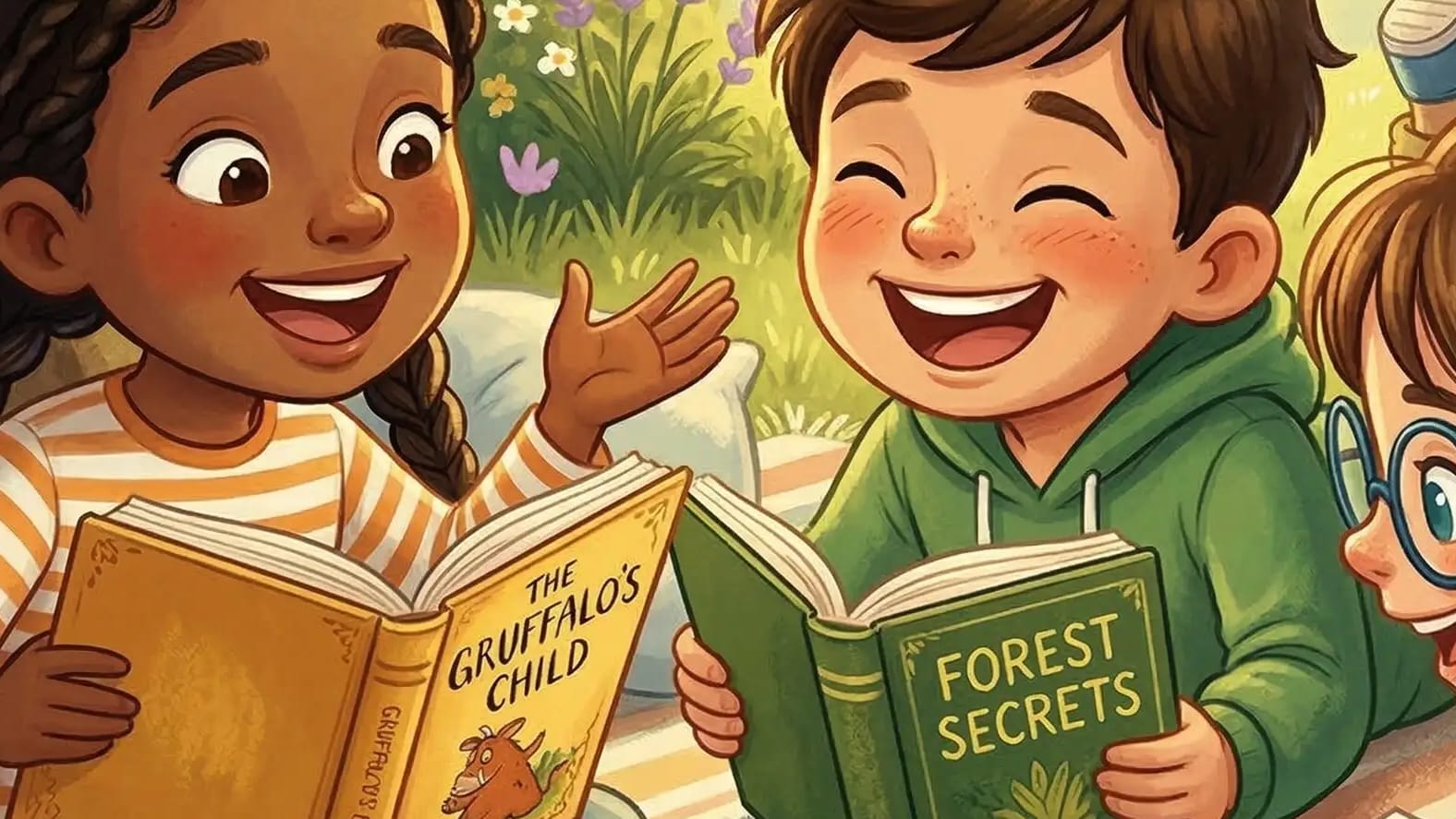
Ready-to-use words for the moments your child says "I can't do it", "I'm stupid" or "I give up", what the research really says, and how to praise in a way that helps.

Why some children read every word but can't tell you what happened, and seven calm ways to build understanding at home, from picturing the story to retelling it.

What brain studies found, why books feel hard after screens, and how to help your child reach for a book more often.

What each genre gives a child, which kind of child it tends to suit, and how to widen a reader who only wants one kind of book.

Learn simple ways to check if a book is the right level—so your child reads with flow, confidence, and enjoyment instead of frustration.

Why some children stop after two pages, and a simple plan to help them read for longer, a minute at a time.
