Middle Grade vs Young Adult: Is My Child Ready for YA Books?
What changes between the two shelves, the signs your child is ready, and how to say yes safely.
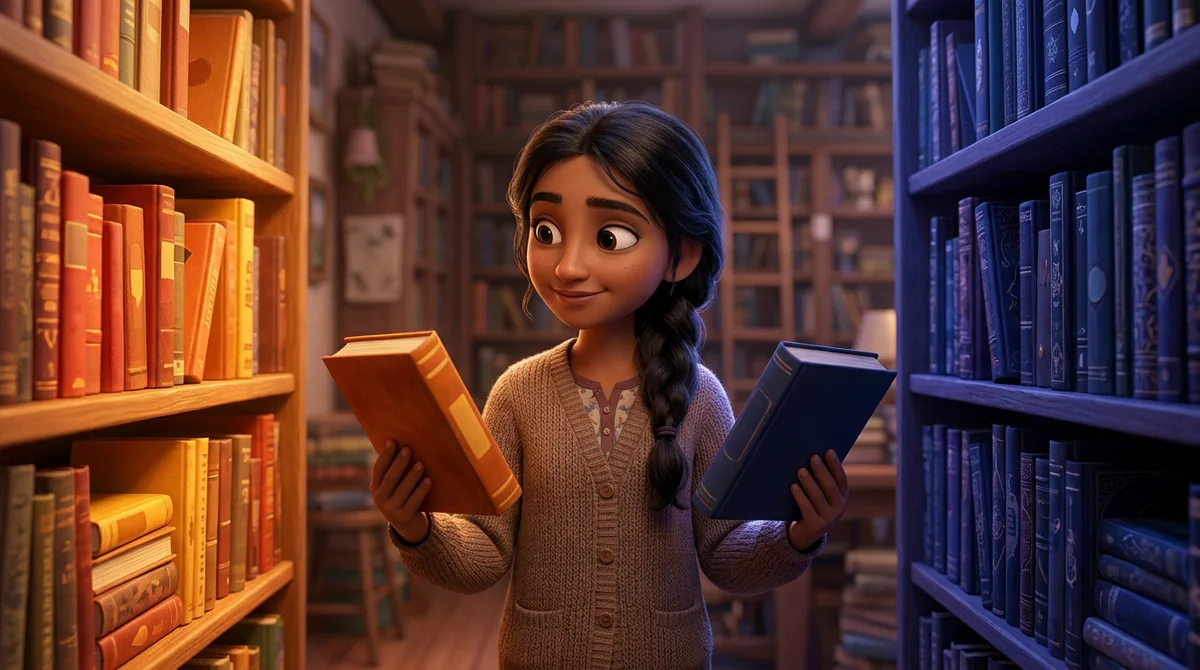
Your eleven-year-old comes home from a friend's house with a fat paperback under one arm. Half the class is reading it, they say. You glance at the cover and recognise it: The Hunger Games. You've heard it's the one where children are made to fight to the death.
Do you say no, say yes, or read the first chapter yourself before deciding?
This is one of the most common questions parents ask about books, and it usually arrives around ten to twelve, when children start to outgrow the middle grade shelf. Here is what the labels mean, what really changes between them, and how to tell when your child is ready.
In short
- Middle grade books are written for readers of about 8 to 12, usually with main characters aged 10 to 13. Young adult (YA) books are written for about 12 to 18, with main characters usually 14 to 18.
- The labels describe the audience, not the genre. There are middle grade and YA fantasies, mysteries and thrillers.
- What changes in YA is mainly content and focus: more intense violence, romance, identity and darker endings.
- Reading skill is not the signal. Many strong readers can read YA at eight. Whether they're ready for the content is a different question.
- Signs of readiness: they ask for it themselves, they handle sad and scary middle grade books well, and they talk to you about what bothers them.
- You don't have to choose between yes and no. Read it alongside them, start with a bridge book, or put it on a list for next year.
What the labels mean
Publishers use these terms for marketing and shelving, so the edges are blurry, but most agree on the basics. As the author Malinda Lo puts it for the Science Fiction and Fantasy Writers Association, middle grade and young adult describe audiences, not genres.
| Middle grade | Upper middle grade | Young adult | |
|---|---|---|---|
| Written for | About 8 to 12 | About 10 to 14 | About 12 to 18 (often 14+) |
| Main character's age | Usually 10 to 13 | 12 to 14 | Usually 14 to 18 |
| Focus | Friendship, family, school, adventure | Growing independence, bigger stakes | Identity, first love, independence, society |
| Endings | Usually hopeful | Usually hopeful, sometimes bittersweet | Can be open, sad or unresolved |
| Content | Roughly what you'd expect from a PG film | Can be darker, still restrained | Can include strong violence, romance, swearing and mature themes |
Children usually like to read about characters a little older than themselves. A nine-year-old reads about twelve-year-olds; a twelve-year-old reaches for books about sixteen-year-olds. That pull towards older characters is natural, and it is why the YA shelf starts to call around this age.
What actually changes in YA
YA is not one thing. Some YA novels are gentler than some middle grade books. But as a category, YA can include:
- Violence that is more graphic and has lasting consequences.
- Romance, from a first kiss to sex, sometimes described.
- Strong language.
- Mental health themes, such as anxiety, depression, self-harm and suicide.
- Drugs and alcohol.
- Endings that don't resolve, or that leave a character worse off.
Middle grade books deal with hard things too: death, war, prejudice, divorce. The difference is usually in how close the camera gets, and whether there is hope at the end.
Where popular books sit
These are some of the books parents ask us about most. The ages are each publisher's or reviewer's own, so they don't always agree.
| Book | Shelf | Age given | Source |
|---|---|---|---|
| Percy Jackson: The Lightning Thief | Middle grade | 8–12 | Disney Hyperion |
| Murder Most Unladylike | Middle grade mystery | Interest and reading age 10+ | BookTrust |
| Refugee | Upper middle grade | 9–12 | Publishers Weekly |
| The Hunger Games | Young adult | 12 and up, grades 7–12 | Scholastic |
| The Book Thief | Young adult | 12 and up | Penguin Random House |
| Scythe | Young adult | 12 and up | Simon & Schuster |
| A Good Girl's Guide to Murder | Young adult | 14 and up (US edition) | Delacorte (Penguin Random House) |
The last one is a good example of how ages vary by country. Delacorte lists the US edition for 14 and up, while BookTrust gives the UK edition an interest age of 12 to 14. If two sources disagree, read the content notes, not just the number.
Signs your child is ready
Reading level matters less than you might think. A child who reads fluently at eight can decode almost any YA novel. The real questions are about the child.
- They're asking for it themselves, not just because everyone else is reading it.
- They've handled sad and scary middle grade books well. A child who was fine with the end of Charlotte's Web and the tension of Number the Stars is in a different place from one who still finds Goosebumps frightening.
- They tell you when something bothers them. That is the best safety net of all.
- They can stop a book. Some children feel they must finish everything. Make sure yours knows that putting a book down is allowed.
- They're curious about the bigger questions the book raises: fairness, power, growing up.
Signs to wait: nightmares after scary scenes, worrying about events in books for days, or reading YA mainly to keep up with older siblings or friends.
How to say yes safely
Read it first, or read it alongside them. You don't need to read every word. Read the first chapters and skim the reviews and content notes. Each of our book guides lists the publisher's age and what to know before choosing.
Read the first chapter together. It tells you about the reading and the mood, and gives your child a chance to say "this isn't for me yet" without losing face.
Agree a pause rule. "If a part bothers you, stop and come and find me. We can talk about it, or skip ahead, or try again next year." Children who know they can stop are much more likely to tell you when they need to.
Talk about it as they go. Not a quiz, just an interest. "Where are you up to? What do you make of the Capitol?" Our guide to questions to ask about a book has ideas that don't feel like a test.
Watch for the film. A book's age band and a film's certificate measure different things. See Book or film first?
Not sure a book is right for them? A Bookbuddy can help you choose.
- Talks through a story
- Writes their own story
- Your report on WhatsApp
Bridge books for "not yet"
If you decide to wait, offer something better than a no. Upper middle grade is full of books with high stakes and big ideas that stop short of YA content.
- If they want The Hunger Games: try The City of Ember (Penguin Random House, 8–12), a story of a failing underground city and two children who look for a way out.
- If they want dark history like The Book Thief: try Number the Stars (RIF, 10–12) or A Night Divided (Publishers Weekly, 8–12).
- If they want spies and danger: try Artemis Fowl (BookTrust, interest age 8–12) or Enola Holmes (Penguin Random House, 8–12).
- If they want a murder mystery: Murder Most Unladylike has a real murder to solve, without gore.
Put the YA book on a "next" list with a rough date. It turns a no into something to look forward to.
If your child is a very strong reader
Strong readers often run out of middle grade books that challenge them, and the obvious next step is YA. A better step is often richer middle grade and older classics: books that stretch their thinking without jumping to teenage content. Our plan for advanced readers has six weeks of books by age, and Reading levels explained shows why a reading level and an age band can point in different directions.
Big books are easier with someone to talk to
Many YA and upper middle grade books are worth reading precisely because they raise big questions about war, power, loss and choice. Those questions are easier to handle with someone to think them through with.
In a Bookstaken session, your child reads a real book picked for their interests and age, and talks it through one to one with a trained college mentor who listens and asks good questions. You get a report on WhatsApp after every session, so you know what came up. The first 60-minute session is free, and you're welcome to sit in. See how 1:1 book discussions work.
Questions parents ask
What age is middle grade?
Middle grade books are written for readers of about 8 to 12. Their main characters are usually 10 to 13. Upper middle grade covers about 10 to 14.
What age is young adult?
Young adult books are written for readers of about 12 to 18, and many publishers label them 14 and up. Their main characters are usually 14 to 18.
Is The Hunger Games middle grade or young adult?
Young adult. Scholastic lists it for ages 12 and up, grades 7 to 12, because of its violence: teenagers are made to fight to the death on television.
Can a 10-year-old read young adult books?
Some can, but reading ability alone is not the test. Check the content of the specific book, read the first chapter together, and make sure your child knows they can stop. Upper middle grade books are often a better fit at ten.
What is the difference between middle grade and young adult books?
Mainly the audience and the content. Middle grade focuses on friendship, family and adventure, usually with hopeful endings. Young adult deals with identity, romance and independence, and can include stronger violence, language and darker endings.
Sources
- Science Fiction and Fantasy Writers Association, An introduction to middle grade and young adult fiction, part 1: definitions.
- Writer's Digest, The key differences between middle grade vs young adult.
- Publisher and reviewer ages as listed: Scholastic (The Hunger Games), Penguin Random House (The Book Thief, The City of Ember, Enola Holmes), Simon & Schuster (Scythe), BookTrust (Murder Most Unladylike, Artemis Fowl, A Good Girl's Guide to Murder UK edition), Publishers Weekly (Refugee, A Night Divided), RIF Literacy Central (Number the Stars), Disney Hyperion (Percy Jackson), Penguin Random House / Delacorte (A Good Girl's Guide to Murder US edition).
More guides on this topic: Reading habits and confidence
Latest Articles
Similar Articles
Want Your Child to Experience Books More Deeply?
Bookstaken pairs kids with caring mentors who turn reading into engaging conversations, inspiring them to eventually write their own stories.
Responses
No responses yet. Be the first to share your thoughts.
Love books yourself? Get paid to read with kids as a Bookbuddy
