Why Dads Reading Aloud Matters (and How to Start)
What studies of fathers reading with children have found, why dads often read a little differently, and easy ways in, from funny books and non-fiction to terrible voices.
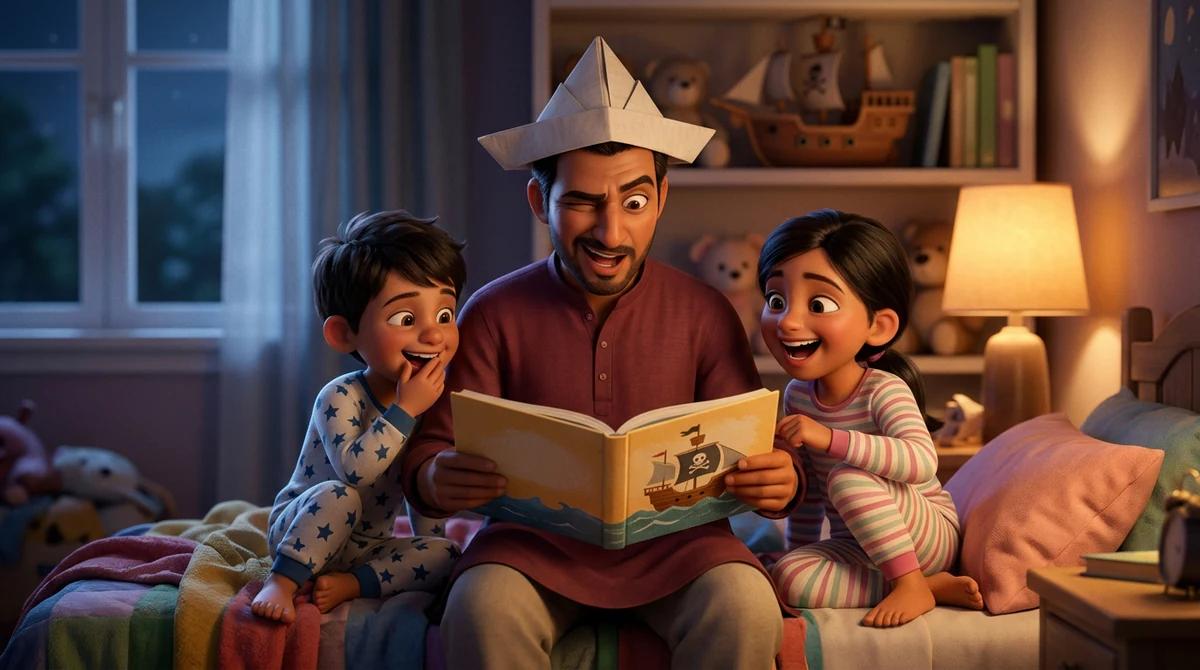
Bedtime is usually Mum's job. Tonight, Dad does it.
He does a terrible pirate voice. He gets the giggles at the wrong moment. Halfway through, he stops to tell a story about a real shipwreck he once read about. The chapter takes twice as long as usual.
"Can Dad do it again tomorrow?"
In many homes, mothers do most of the reading aloud. But when fathers read too, children gain something extra. Here's what the research shows, and some easy ways for dads to start, at any age.
In short
- In many families, dads read aloud much less. In a study of 464 parents in the Netherlands, fathers were the main reader in 8% of families, mothers in 65% (Duursma, 2014).
- It counts when they do. In a US study of low-income families, fathers' reading predicted their young children's later thinking skills, and their language skills where the father had at least a high school education (Duursma and colleagues, 2008).
- Dads often read differently, with more talk that goes beyond the page (Duursma, 2016).
- Start small: ten minutes, one night a week, a funny book or a book about something you love.
- It's not just for little ones. Keep reading aloud at 8, 10 and 12.
What the research shows
Most studies of reading aloud have looked at mothers. The research on fathers is smaller, but it's growing.
- Who reads. In a 2014 study of 464 parents in the Netherlands, fathers were the primary reader in only 8% of families, compared with 65% for mothers.
- What it does. A study of low-income fathers in the US, part of the national evaluation of Early Head Start, followed their children from ages 2 to 5. How often fathers read to their children predicted the children's cognitive outcomes. It also predicted their language outcomes, but only for children whose fathers had at least a high school education.
- How dads read. In a later study of US families with two- and three-year-olds, fathers used more "non-immediate" talk while sharing a book, meaning talk that goes beyond the pictures and words on the page, and more strategies to keep the child engaged.
These studies looked at young children, and they show links rather than proof of cause. But they point the same way: when dads read, it matters.
Why it matters for older children too
- They see a dad who reads. Children notice who reads at home. See how to get boys reading.
- It's time together that doesn't need a plan, a ticket or a screen.
- They hear a different voice, different jokes and different questions.
- Harder books become possible. A child can follow a story read aloud that they couldn't read alone yet.
Ten easy ways to start
- Pick one night a week that's yours. Small and regular beats big and rare.
- Start with something funny. Laughing together is the easiest way in. Try our funny books for kids.
- Read about what you love. Cricket, space, cars, history, animals: non-fiction counts. See our non-fiction books for kids and sports books.
- Do the voices. Badly is fine. Badly is often better.
- Go off the page. "Have you ever seen a real shark?" "What would you do if you found that map?" That talk beyond the book is exactly what the research found dads do well.
- Read what they're into. Comics and game books count. See books for kids who love video games.
- Away from home? Read on a video call. Keep a copy of the same book at each end.
- Let them read to you, a page each, or a chapter each.
- Try audiobooks in the car, and talk about them on the way.
- Let them see you read your own book, newspaper or magazine.
For the basics, see how to read aloud to your child.
Books dads and children enjoy together
| Book | Age (source) | Why it works for a dad read-aloud |
|---|---|---|
| The Twits | 8–12 (Penguin Random House) | Short, disgusting and very funny; made for silly voices |
| Charlie and the Chocolate Factory | Interest and reading age 8+ (BookTrust) | Big characters and short chapters |
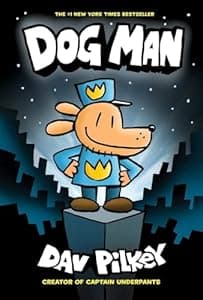
| Dog Man | Bookstaken's catalogue suggests 6–11 | A comic you can perform, with sound effects |
| The Wild Robot | 8–12 (Hachette) | Short chapters, survival and a robot with feelings |
| Holes | 10 and up (Penguin Random House) | A mystery that's even better when you're both trying to work it out |
| Hatchet | Catalogue suggests 12–14 | A boy alone in the wild after a plane crash; a 1988 Newbery Honor book |
For more, see our read-aloud chapter books.
A Bookbuddy reads with your child, one to one.
- Talks through a story
- Writes their own story
- Your report on WhatsApp
If it feels awkward
- Read the first page silently first, so you know where it's going.
- Don't worry about reading "well". Children care far more that you're there.
- Let them correct you. A child who knows the story loves to catch you out.
- Stop when it's still fun. "Same time next week?" keeps them wanting more.
By age
| Age | What works |
|---|---|
| 6–8 | Picture books and short chapter books, voices, sound effects, reading a little every week |
| 9–11 | Longer chapter books, a series you share, non-fiction about your interests, swapping pages |
| 12–14 | Reading the same book separately and talking about it, audiobooks on journeys, books from your own childhood |
Dads welcome
In a Bookstaken session, your child reads a real book picked for their interests and talks it through one to one with a trained college mentor on Google Meet. Then they write a story of their own, chapter by chapter.
After every session, you get a report on WhatsApp. The first 60-minute session is free, and you're welcome to sit in, dads included. See how it works.
Questions parents ask
Why is it important for dads to read to their children?
Research suggests it counts: in a US study, how often fathers read to their young children predicted the children's later thinking skills. Dads who read also show their children that reading is for everyone, and it's simple, regular time together.
Do fathers read differently from mothers?
One US study of families with two- and three-year-olds found fathers used more talk that went beyond the book itself, and more ways to keep the child engaged. Every parent is different, but that "off the page" talk is worth doing.
What should dads read to their kids?
Something you'll both enjoy: funny books, comics, adventure stories, or non-fiction about sport, space, machines or history. Books with big characters and short chapters, like The Twits, are easy to start with.
How long should a dad read to his child?
Ten to fifteen minutes is plenty. One regular night a week is a good start, and more if it becomes a favourite.
My child is 11. Is it too late to start reading aloud?
No. Older children still enjoy being read to, especially books a little harder than they'd choose alone. You can also read the same book separately and talk about it.
Sources
- Duursma, E. (2014). Parental bookreading practices among families in the Netherlands. Journal of Early Childhood Literacy.
- Duursma, E., Pan, B. A. and Raikes, H. (2008). Predictors and outcomes of low-income fathers' reading with their toddlers. Early Childhood Research Quarterly.
- Duursma, E. (2016). Who does the reading, who the talking? Low-income fathers and mothers in the US interacting with their young children around a picture book. First Language.
- Clark, C. (2009). Why fathers matter to their children's literacy. National Literacy Trust.
- Penguin Random House. The Twits: ages 8–12.
- BookTrust. Charlie and the Chocolate Factory: interest and reading age 8+.
- Hachette. The Wild Robot: ages 8–12.
- Penguin Random House. Holes: ages 10 and up.
More guides on this topic: Reading habits and confidence
Latest Articles
Similar Articles
Want Your Child to Experience Books More Deeply?
Bookstaken pairs kids with caring mentors who turn reading into engaging conversations, inspiring them to eventually write their own stories.
Responses
No responses yet. Be the first to share your thoughts.
Love books yourself? Get paid to read with kids as a Bookbuddy
