Why Do Kids Reread the Same Book? (And Why It's Good)
Comfort, mastery and noticing more: why children go back to the same book, what research says about repeated reading, and gentle ways to nudge them towards something new.
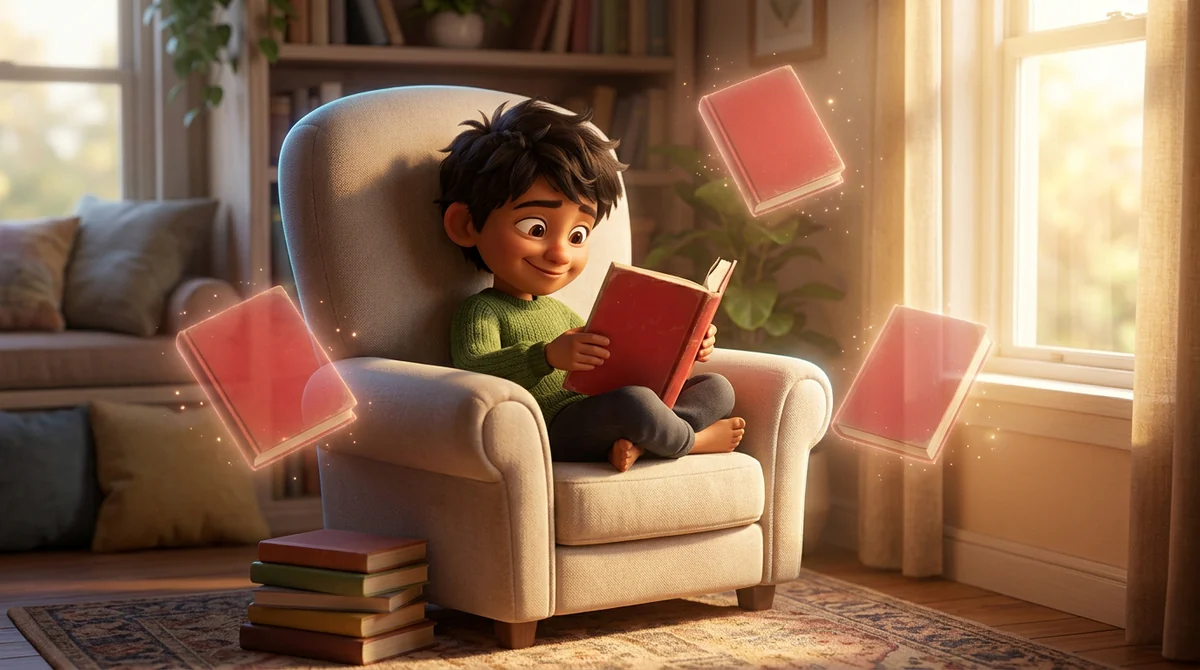
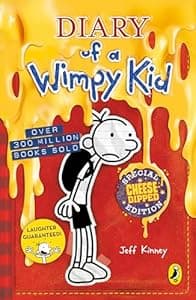
It's the fourth time this year. The same battered copy of Diary of a Wimpy Kid, the same giggles at the same pages.
"Haven't you read that already?"
"Yes. That's why I like it."
Rereading can look like standing still. Usually it's the opposite. Here's why children go back to the same book, what research says about it, and when it's worth a gentle nudge.
In short
- Rereading is normal, and often the sign of a child who loves books.
- Children reread for comfort, for the jokes, to master a story and to notice what they missed.
- Repetition helps young children learn words. In a study of 3-year-olds, children who heard the same story three times learned its new words; children who heard different stories didn't (Horst and colleagues, 2011).
- Reading the same text aloud again, with guidance, improves fluency and understanding (National Reading Panel, 2000).
- Nudge, don't ban: keep the old favourite and add one new book alongside it.

Why children reread
- Comfort. They know how it ends, and that it ends well. Some children reread more at stressful times: a new school, exams, a move.
- Mastery. The first read is for the plot. The next ones are for the jokes, the details and the clues.
- Control. Knowing what's coming feels good, especially for children who find new things hard.
- Ease. Words that were hard the first time come easily now, so the reading feels fluent and fun.
- Noticing more. Older children spot the hints they missed, the twist that was there all along, the character who wasn't what they seemed.
- Sharing. They want to quote it, laugh about it and talk about it with friends.
What the research shows
- Young children learn more words from repeated stories. Researchers at the University of Sussex read specially made storybooks to 3-year-olds three times in a week. Some children heard the same story each time; others heard different stories containing the same new words. The children who heard the same stories remembered the new words, and still knew them when tested later. The children who heard different stories didn't learn any of them (Horst and colleagues, 2011).
- Repeated reading aloud builds fluency. The US National Reading Panel reviewed studies of guided repeated oral reading, in which a child reads the same passage aloud several times with feedback. It found a consistent, positive effect on word recognition, fluency and comprehension across a range of school grades (National Reading Panel, 2000).
These studies looked at young children and at guided reading aloud, not at a ten-year-old's fifth read of a favourite series. But they point the same way: going back to a text helps children learn from it.
Rereading at different ages
| Age | What it often looks like |
|---|---|
| 6–8 | The same picture book or early chapter book again and again, and reading a familiar book aloud to you |
| 9–11 | Comfort series such as Dog Man, Diary of a Wimpy Kid and Geronimo Stilton, favourite chapters and quoting lines |
| 12–14 | Rereading a long series before the next book comes out, and noticing clues and themes they missed |
Make the reread richer
Ask about it, rather than asking them to stop:
- "What did you notice this time that you missed before?"
- "Which part do you skip to?"
- "Who's your favourite character now? Has it changed?"
- "If you could change one thing in it, what would it be?"
Or try something new with an old favourite:
- Read it to a younger brother or sister, with voices.
- Write a new chapter, or the story from another character's point of view. See story writing for kids.
- Compare it with the film. See book or film first?
For more conversation starters, see questions to ask your child about a book.
When to nudge
Rereading is worth a gentle nudge when:
- your child has read nothing new for months and refuses to try;
- they reread because new books feel too hard (see is a book too easy or too hard?);
- they reread because nothing else appeals (see how to find books your child actually loves).
A free 1:1 reading session for your child
- Talks through a story
- Writes their own story
- Your report on WhatsApp
How to nudge, gently
- One old, one new. Keep the favourite, and add a new book alongside it.
- Same feel, new book. Try our lists of books like Harry Potter, Dog Man and Diary of a Wimpy Kid.
- Same author, or the next in the series. It's new, but it feels familiar.
- Read the first chapter of a new book aloud together. A strong start carries them in.
- Don't ban the favourite. Taking it away can make reading feel like a rule, not a pleasure.
Rereading and confidence
For a child who finds reading hard, a familiar book is a chance to read well, with expression and without stumbling. That success matters. See how to build reading confidence.
Talking about a book they love
In a Bookstaken session, your child reads a real book picked for their interests and talks it through one to one with a trained college mentor on Google Meet. At the Review stop, they give their own verdict on it. Then they write a story of their own, chapter by chapter.
After every session, you get a report on WhatsApp. The first 60-minute session is free. See how it works.
Questions parents ask
Is it bad for kids to reread the same book?
No. Rereading is normal and often helpful. Children reread for comfort, for the jokes and to notice things they missed. Nudge gently only if they've read nothing new for months.
Why does my child keep reading the same book?
Usually for comfort, enjoyment or mastery: they know it ends well, they love the jokes, and every read feels easier. Older children also enjoy spotting details they missed the first time.
Does rereading help reading skills?
Research suggests it can. Three-year-olds learned new words from a story they heard several times, but not from different stories (Horst and colleagues, 2011), and guided repeated reading aloud improves fluency and understanding (National Reading Panel, 2000).
How do I get my child to read something new?
Keep the favourite and add one new book alongside it. Choose something with the same feel, the same author or the next book in the series, and read the first chapter aloud together.
Does rereading count as reading time?
Yes. Rereading a favourite book is still reading, and it often builds fluency and confidence.
Sources
- Horst, J. S., Parsons, K. L. and Bryan, N. M. (2011). Get the story straight: contextual repetition promotes word learning from storybooks. Frontiers in Psychology, 2.
- National Reading Panel (2000). Teaching children to read: an evidence-based assessment of the scientific research literature on reading and its implications for reading instruction. National Institute of Child Health and Human Development.
More guides on this topic: Reading habits and confidence
Latest Articles
Similar Articles
Want Your Child to Experience Books More Deeply?
Bookstaken pairs kids with caring mentors who turn reading into engaging conversations, inspiring them to eventually write their own stories.
Responses
No responses yet. Be the first to share your thoughts.
Love books yourself? Get paid to read with kids as a Bookbuddy
