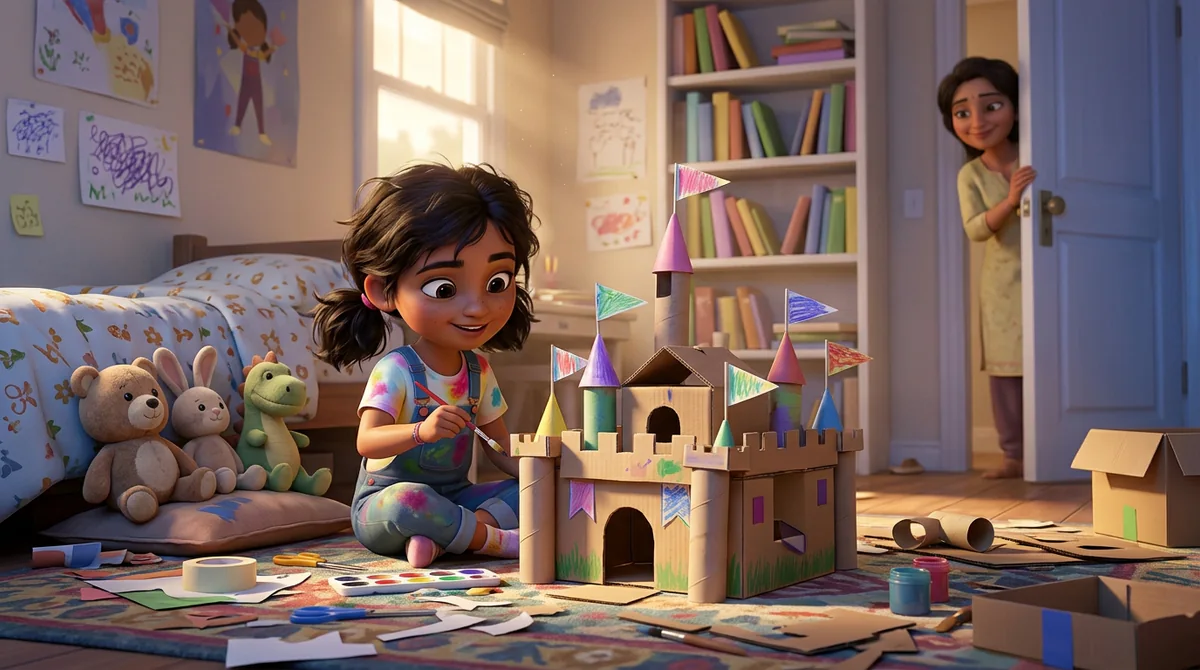
A small daily reading ritual that fits around work, how to use commutes and weekends, and how to share the reading with grandparents, older siblings, carers and a mentor.

Short, daily, child-led time that fits a busy week: 30 ideas for talking, playing, making, moving and reading together, what works at each age, and how to keep phones out of it.

What the research says about understanding, focus and sleep, and when an e-reader genuinely helps.

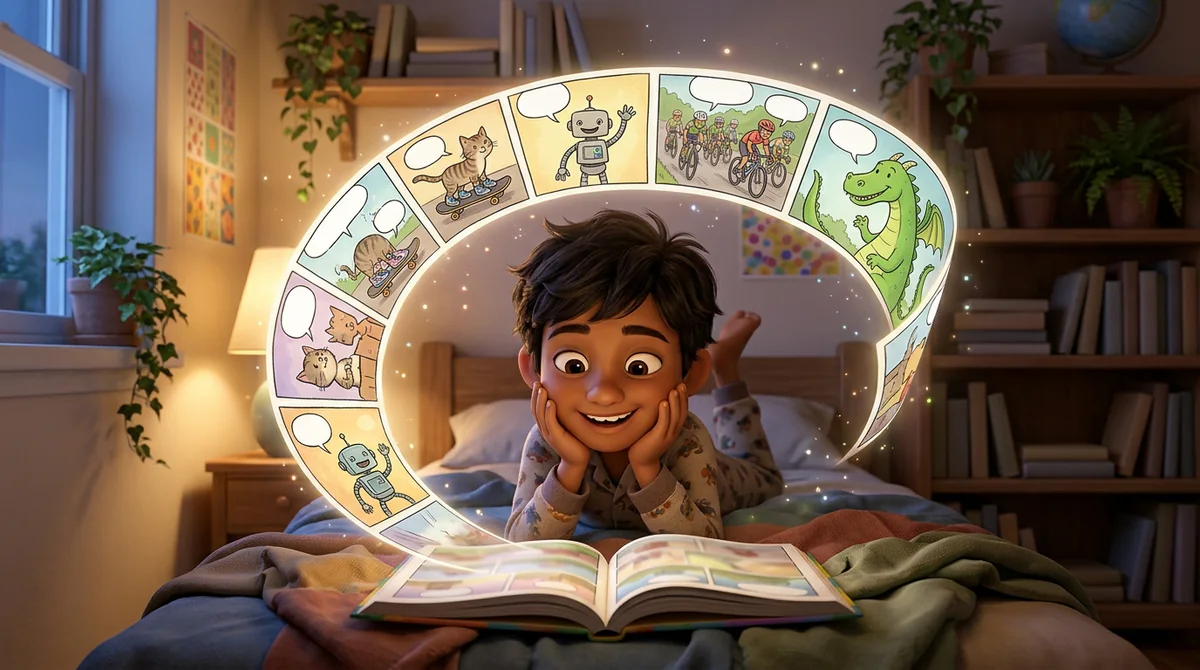
Comics and graphic novels are real reading. What the research says about how they build inference and vocabulary, and how to move from comics to longer books without taking the comics away.
What to check first, when to ask for help, and calm, practical ways to support a child who finds reading hard.

Five questions that turn "It was good" into a review someone would want to read.

Ready-to-use words for the moments your child says "I can't do it", "I'm stupid" or "I give up", what the research really says, and how to praise in a way that helps.

AI can explain, quiz and give feedback, or it can do the thinking for your child. Simple family rules for homework, privacy and spotting fakes.

Fifty classic riddles from easy to hard, "what am I?" riddles, riddles about favourite books, and how to help your child make up their own.

Only children aren't lonelier or more spoiled than others, but they do need a different plan for company, play and time alone. Practical ideas for ages 6–14.