Kindle, Tablet or Paper: What's Best for Your Child's Reading?
What the research says about understanding, focus and sleep, and when an e-reader genuinely helps.

A birthday is coming up, and a relative asks whether your child would like a Kindle. It sounds like a good idea: hundreds of books in one slim device, no more trips to the library, no more lost paperbacks under the bed.
Then you wonder. Isn't it just another screen? Does reading on a device count as screen time? Will they actually read on it, or drift off to something else? And what about the tablet they already use to read at bedtime?
These are fair questions, and the answer depends on which device, which child and what time of day. Here is what research says, and a simple way to decide.
In short
- Paper, e-readers and tablets are three different things. E-ink readers like a Kindle are much closer to paper than a tablet is.
- Understanding: a large review found readers understand slightly more from paper than from screens, especially for information texts and when reading against the clock. For stories read at their own pace, the difference is small.
- Focus: tablets bring games and notifications. Dedicated e-readers don't.
- Sleep: in a lab study, adults who read on a tablet before bed fell asleep later and felt less alert the next morning than when they read a printed book.
- When e-readers help: bigger text, shorter lines, built-in dictionaries, travel, and cheaper access to lots of books.
- Our suggestion: paper first, especially for books you'll talk about; an e-reader for keen readers who travel or need larger text; a tablet only with other apps locked away, and never at bedtime.
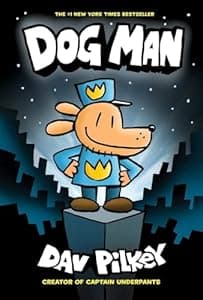
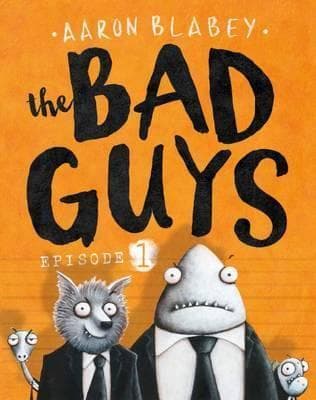
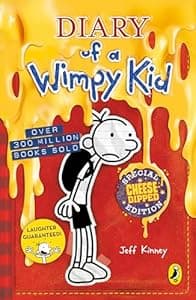
Three different devices
| Paper book | E-reader (e-ink, such as Kindle) | Tablet or phone | |
|---|---|---|---|
| Screen | None | E-ink: reflects light like paper, often with an adjustable front light | Backlit, bright, full colour |
| Distractions | None | Very few: built for reading | Games, videos, messages, notifications |
| Good for | All reading, especially books you'll discuss | Long books, travel, adjustable text size | Picture-heavy books, comics, when nothing else is available |
| Bedtime | Ideal | Fine with the light dimmed | Best avoided |
When people say "reading on a screen", they often mean all of these at once. They shouldn't. An e-ink reader in a dark bedroom is a very different experience from a tablet with a game one swipe away.
Do children understand more on paper?
On average, a little more. A meta-analysis of studies from 2000 to 2017, covering more than 170,000 readers, found a small but consistent advantage for paper over screens in reading comprehension (Delgado and colleagues, 2018).
The details matter:
- The paper advantage was larger when readers were under time pressure than when they read at their own pace.
- It was clearer for information texts, such as articles and textbooks, than for stories.
Why might paper help? Researchers suggest readers tend to skim more on screens and settle into slower, deeper reading on paper. Paper also gives a sense of place: you know the scary bit was near the bottom of a left-hand page, two-thirds of the way through. Children use that sense of place when they go back to check something, or when they talk about the book.
What this means for you: for a story your child reads at their own pace, an e-reader is fine. For homework reading, revision and anything they'll need to remember, paper has the edge.
Focus: the device matters more than the screen
A paper book can only be a book. A tablet can be a book, a game, a video and a chat, and the other options never go away. Many children who sit down to read on a tablet end up somewhere else within ten minutes, not because they lack willpower but because the device is designed to pull them.
Dedicated e-readers solve most of this. They are slow at anything except reading, which is exactly the point.
If a tablet is the only device available, lock other apps during reading time, turn on do not disturb, and keep it in a shared room.
Sleep: why bedtime is different
Light in the evening affects sleep. In a study published in PNAS, twelve adults read either a tablet or a printed book for about four hours before bed on five evenings in a row. After reading on the tablet, they produced less of the sleep hormone melatonin, took longer to fall asleep, had a delayed body clock and felt less alert the next morning (Chang and colleagues, 2015).
The study was small, in adults and in a lab, so it doesn't tell us exactly what happens to a child reading for twenty minutes. But the direction is clear, and children's sleep is easily disturbed.
At bedtime:
- Paper is ideal.
- E-ink readers give off far less light than tablets. Turn the front light down, and use a warmer setting if yours has one.
- Tablets and phones are best kept out of the bedtime routine altogether.
When an e-reader genuinely helps
E-readers have real advantages, and for some children they make reading easier.
- Adjustable text. Bigger letters, more spacing and shorter lines can help children who find dense pages tiring. In one study of 103 secondary school students with dyslexia, reading on a small e-reader with few words per line helped some of them read faster and understand more, particularly those who struggled most with decoding or with visual attention (Schneps and colleagues, 2013). It didn't help everyone, so try it rather than assume.
- Built-in dictionary. Tapping a word to see its meaning keeps a reader going without breaking the story.
- Travel and holidays. A whole series in a bag.
- Access. E-books are often cheaper, and many libraries lend them free.
- Privacy for older readers. Some children are self-conscious about reading "younger" books in public, and an e-reader hides the cover.
Make reading the part of the week they look forward to
- Talks through a story
- Writes their own story
- Your report on WhatsApp
Is reading on a tablet screen time?
Technically, yes: it happens on a screen. But what a child does on a screen matters more than the screen itself. Reading a novel on an e-reader is very different from watching short videos, and most families count them differently.
A sensible approach is to count reading on a dedicated e-reader as reading, and reading on a tablet as reading only if other apps are locked. Our guides to how much screen time is too much and screen time vs reading cover the bigger picture.
Audiobooks are a different question again, and a good one. See Do audiobooks count as reading?
How to decide for your child
Choose paper when:
- your child is younger, or still building reading stamina;
- the book is one you'll talk about together;
- it's bedtime;
- the reading is for school and needs to be remembered.
Choose an e-reader when:
- your child reads a lot and you can't keep up with buying books;
- they need bigger text or shorter lines;
- you're travelling;
- they're self-conscious about what they're reading.
Use a tablet when:
- the book needs full colour, such as some comics and picture-heavy non-fiction;
- nothing else is available, with other apps locked away.
Many families end up with a mix: paper at home and at bedtime, an e-reader in the holiday bag. That's a perfectly good answer.
Why Bookstaken sessions use a physical copy
In a Bookstaken session, your child reads their own physical copy of a real book picked for their interests, not a PDF on a screen. Paper makes it easy to flip back to a page, point at a line and see how far they've come, and it keeps the reading itself away from notifications. The 60-minute conversation with their mentor happens live on Google Meet, but the book stays in their hands.
Most children finish a book in four to six sessions, with a short reading quest between sessions to keep the story going. The first session is free. See how it works.
Questions parents ask
Is a Kindle good for kids?
A dedicated e-reader such as a Kindle can be good for children who already enjoy reading, need larger text or travel often. It has very few distractions. For younger children, and for books you'll talk about together, paper is usually better.
Is reading on a tablet considered screen time?
It happens on a screen, but it isn't the same as watching videos or playing games. Many families count reading on an e-reader as reading, and reading on a tablet as reading only when other apps are locked.
Is reading on a tablet before bed bad for children?
It can affect sleep. In a lab study, adults who read on a tablet before bed fell asleep later and were less alert the next morning than when they read a printed book. Paper, or an e-reader with the light turned down, is better at bedtime.
Do children understand more from paper books than e-books?
Slightly, on average. A large review found a small advantage for paper, mainly for information texts and timed reading. For stories read at their own pace, the difference is small.
At what age can a child have an e-reader?
There is no set age. An e-reader makes most sense once a child reads chapter books on their own and enjoys it. Before that, paper books and reading together matter more.
Sources
- Chang, A.-M., Aeschbach, D., Duffy, J. F., & Czeisler, C. A. (2015). Evening use of light-emitting eReaders negatively affects sleep, circadian timing, and next-morning alertness. PNAS, 112(4), 1232–1237.
- Delgado, P., Vargas, C., Ackerman, R., & Salmerón, L. (2018). Don't throw away your printed books: A meta-analysis on the effects of reading media on reading comprehension. Educational Research Review, 25, 23–38.
- Schneps, M. H., Thomson, J. M., Chen, C., Sonnert, G., & Pomplun, M. (2013). E-readers are more effective than paper for some with dyslexia. PLoS ONE, 8(9), e75634.
More guides on this topic: Screen time and tech
Latest Articles
Similar Articles
Want Your Child to Experience Books More Deeply?
Bookstaken pairs kids with caring mentors who turn reading into engaging conversations, inspiring them to eventually write their own stories.
Responses
No responses yet. Be the first to share your thoughts.
Love books yourself? Get paid to read with kids as a Bookbuddy
