The Benefits of Reading for Children: What the Research Actually Shows
Eight benefits with real evidence behind them, how strong each one is, and the kind of reading that brings them.
Every parent has been told that reading is good for children. It is said so often that it has started to sound like "eat your vegetables": true, probably, but vague, and easy to nod at and ignore.
The research is more interesting than the slogan. Some benefits of reading are backed by decades of studies across many countries. Others are real but smaller than the headlines suggest. And almost all of them depend on a particular kind of reading: regular, chosen and enjoyed.
Here is what the evidence actually shows, with the study behind each benefit and an honest note on how far it goes.
In short
- Vocabulary: books contain far more rare words than everyday talk or television, and children who read more know more words. This is one of the strongest findings in the field.
- Progress at school: children who read for pleasure make more progress in vocabulary, spelling and even maths as teenagers.
- More reading, many more words: a few extra minutes a day adds up to hundreds of thousands of extra words a year.
- Writing: reading improves writing.
- Understanding others: fiction has a small but real effect on understanding how other people think and feel.
- Wellbeing: children who enjoy reading and writing report better mental wellbeing.
- Books at home: children from homes with many books go further in education, across dozens of countries.
- Thinking out loud: talking about books, not just reading them, is where comprehension and reasoning grow.
- Most of this evidence shows links, not proof that reading alone causes the benefit. But the links are consistent, and the cost of trying is a library card.
1. A bigger vocabulary
Children learn most new words from reading, not from conversation. The reason is simple: books use more unusual words. A well-known analysis found that children's books contained about 30.9 rare words per thousand, more than adult prime-time television and almost double the 17.3 per thousand in conversations between university graduates (Hayes and Ahrens, 1988, as reported by Cunningham and Stanovich, 1998).
A child who reads regularly meets thousands of words they would rarely hear spoken. A large review of 99 studies found that the amount children read was linked to their oral language, their reading comprehension and their spelling, and that the link grew stronger with age: reading explained about 12% of the differences in children's oral language at preschool age and about 30% by secondary school (Mol and Bus, 2011).
How strong is it? Very. The link appears in study after study. The authors also found that it runs both ways: better readers read more, and reading more makes them better readers.
For everyday ideas, see How to improve your child's vocabulary.
2. More progress at school, including maths
Researchers at the UCL Institute of Education followed around 6,000 people from the 1970 British Cohort Study. Children who read for pleasure at ages 10 and 16 made more progress between those ages in vocabulary, spelling and maths than children who rarely read, even after taking account of their earlier test scores and family background. The effect was largest for vocabulary (Sullivan and Brown, 2013).
How strong is it? Strong for a single study, because it tracks the same children over time and compares their progress, not just their scores. It is still observational: children who choose to read may differ in other ways too.
3. A few minutes a day adds up to millions of words
In a classic US study of fifth graders, children at the 90th percentile for reading time read about 21 minutes a day outside school, which came to roughly 1.8 million words a year. Children at the median read about 4.6 minutes a day, roughly 282,000 words (Anderson, Wilson and Fielding, 1988).
The difference in minutes is small. The difference in words is enormous, and every one of those words is practice.
How strong is it? The numbers are estimates from reading logs, so treat them as a picture of scale rather than exact counts. Our guide to how much a child should read every day turns this into a daily routine by age.
4. Better writing
Children who read more write better, and it is not just a coincidence. A review of studies in which children were given extra reading instruction or reading activities found that their writing improved too (Graham and colleagues, 2018). Reading shows children how sentences, stories and arguments are built, long before anyone teaches them the rules.
How strong is it? Good. It is based on experiments, not just links. See Why children who read more become better writers.
5. Understanding how other people think and feel
When children read a story, they spend hours inside someone else's head. A review of experiments found that reading fiction produced a small improvement in social understanding: working out what others think, feel and intend (Dodell-Feder and Tamir, 2018).
Stories can shift attitudes too. In one study, Italian schoolchildren who read and discussed passages from Harry Potter about prejudice, and who identified with Harry, showed more positive attitudes towards immigrants afterwards (Vezzali and colleagues, 2015).
How strong is it? Real but small. Reading a story is not a shortcut to kindness, but it gives children practice in seeing the world from another side, and something to talk about. See How stories help children develop empathy.
6. Better wellbeing
In a UK survey of 49,047 children and young people aged 8 to 18, those who enjoyed and regularly took part in reading and writing were about three times as likely to have high mental wellbeing as those who didn't: 39.4% compared with 11.8% (National Literacy Trust, 2018).
How strong is it? This is a survey, so it shows a link, not a cause. Children who are doing well may read more, as much as reading helps them do well. It covers reading and writing together. Still, few parents would argue with a hobby that comes with a calmer, more confident child.
Make reading the part of the week they look forward to
- Talks through a story
- Writes their own story
- Your report on WhatsApp
7. Books at home, and how far children go in education
A study of more than 70,000 people in 27 countries found that children who grew up in homes with many books got about three more years of schooling than children from homes without books. The effect held regardless of parents' education, occupation and class, and in rich and poor countries alike (Evans, Kelley, Sikora and Treiman, 2010).
How strong is it? The finding is robust, but the books are probably a sign of something bigger: a home where reading, talk and curiosity are part of everyday life. Buying a shelf of books won't do the work on its own. Reading them, and talking about them, will.
8. Thinking out loud
Reading builds understanding, but talking about what you've read is where much of it happens. A review of 42 studies of book discussion found that approaches which got students talking more, and teachers talking less, improved their understanding of the text. The approaches that asked students to question and argue about what they read were the ones linked to better reasoning and argument (Murphy and colleagues, 2009).
How strong is it? Moderate, and it varies with how the discussion is run. But it matches what every parent sees: a child who explains why they hated a character has understood the book far better than one who just turned the pages. See Why children who read become better thinkers and Questions to ask your child about a book.
What kind of reading brings these benefits?
The studies point to the same few things.
- Reading for pleasure, not just for school. Most of the evidence is about children who read because they want to.
- Regular, not heroic. Twenty minutes most days beats two hours once a month.
- Chosen by the child. In Scholastic's Kids and Family Reading Report, 89% of children aged 6 to 17 said their favourite books were the ones they picked themselves (2019).
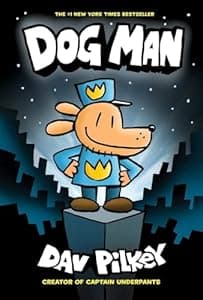
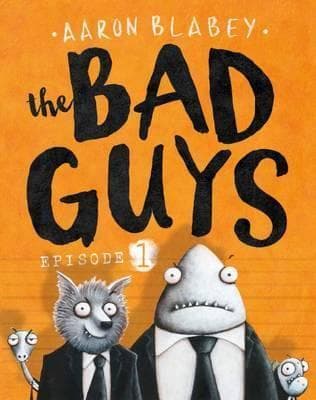
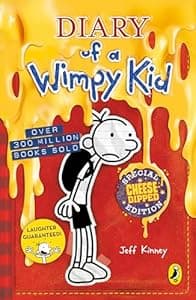
- Every format counts. Graphic novels and audiobooks build many of the same skills. See Do graphic novels count as reading? and Do audiobooks count as reading?
- Talked about. A conversation turns a story into thinking.
What reading won't do
It is worth being clear about the limits.
- Most findings are links, not proof. Families who read differ in many ways, and the best studies try hard to account for that.
- Reading is not a cure. It won't fix a learning difficulty on its own, and a child who struggles to read needs proper support. See How to support a struggling reader.
- Forcing it backfires. The benefits come from reading children enjoy. Pressure, rewards and long reading logs can turn reading into a chore. See How to motivate your child to read without rewards or punishments.
Reading, talking and writing, together
The research points to three habits that work best side by side: reading regularly, talking about what you read, and writing your own ideas down. That is how a Bookstaken session is built. Your child reads a real book picked for their interests, talks it through one to one with a trained college mentor, gives their own verdict and writes a story of their own. You get a report on WhatsApp after every session.
It works for keen readers, who get someone to think out loud with, as well as for reluctant ones. The first 60-minute session is free. See how it works.
Questions parents ask
What are the main benefits of reading for children?
A bigger vocabulary, better progress at school, stronger writing, a better understanding of other people, and better wellbeing. The strongest evidence is for vocabulary and reading skills; the effects on empathy are real but small.
Does reading for pleasure improve school results?
Studies suggest it does. In a British study of around 6,000 people, children who read for pleasure at 10 and 16 made more progress in vocabulary, spelling and maths between those ages than children who rarely read.
How much does a child need to read to benefit?
There is no magic number, but regular reading matters more than long sessions. In one US study, children who read about 21 minutes a day outside school read around 1.8 million words a year, compared with 282,000 for children who read about 5 minutes.
Do audiobooks and graphic novels have the same benefits?
Many of them. Audiobooks build vocabulary and understanding of stories, and graphic novels are real reading with their own skills. Both work best alongside some reading of print.
Is reading good for a child's mental health?
Children who enjoy reading and writing report better mental wellbeing in large surveys. It is a link rather than proof, but reading gives children calm, absorbing time and stories that help them make sense of their own feelings.
Sources
- Anderson, R. C., Wilson, P. T., & Fielding, L. G. (1988). Growth in reading and how children spend their time outside of school. Reading Research Quarterly, 23(3), 285–303.
- Cunningham, A. E., & Stanovich, K. E. (1998). What reading does for the mind. American Educator, 22(1–2), 8–15. Reports Hayes, D. P., & Ahrens, M. G. (1988), Journal of Child Language, 15, 395–410.
- Dodell-Feder, D., & Tamir, D. I. (2018). Fiction reading has a small positive impact on social cognition: A meta-analysis. Journal of Experimental Psychology: General, 147(11), 1713–1727.
- Evans, M. D. R., Kelley, J., Sikora, J., & Treiman, D. J. (2010). Family scholarly culture and educational success: Books and schooling in 27 nations. Research in Social Stratification and Mobility, 28(2), 171–197.
- Graham, S., and colleagues (2018). Reading for writing: A meta-analysis of the impact of reading interventions on writing. Review of Educational Research, 88(2), 243–284.
- Mol, S. E., & Bus, A. G. (2011). To read or not to read: A meta-analysis of print exposure from infancy to early adulthood. Psychological Bulletin, 137(2), 267–296.
- Murphy, P. K., and colleagues (2009). Examining the effects of classroom discussion on students' comprehension of text: A meta-analysis. Journal of Educational Psychology, 101(3), 740–764.
- National Literacy Trust (2018). Children who enjoy reading and writing have significantly better mental wellbeing than their peers.
- Scholastic (2019). Kids and Family Reading Report, 7th edition.
- Sullivan, A., & Brown, M. (2013). Social inequalities in cognitive scores at age 16: The role of reading. Centre for Longitudinal Studies, UCL Institute of Education.
- Vezzali, L., Stathi, S., Giovannini, D., Capozza, D., & Trifiletti, E. (2015). The greatest magic of Harry Potter: Reducing prejudice. Journal of Applied Social Psychology, 45(2), 105–121.
More guides on this topic: Reading habits and confidence
Latest Articles
Similar Articles
Want Your Child to Experience Books More Deeply?
Bookstaken pairs kids with caring mentors who turn reading into engaging conversations, inspiring them to eventually write their own stories.
Responses
No responses yet. Be the first to share your thoughts.
Love books yourself? Get paid to read with kids as a Bookbuddy
