Should Children Read the Classics? Originals, Abridged Versions and When Each Works
Why classics feel hard, the difference between abridged, retold and original, and which classics to share at each age.
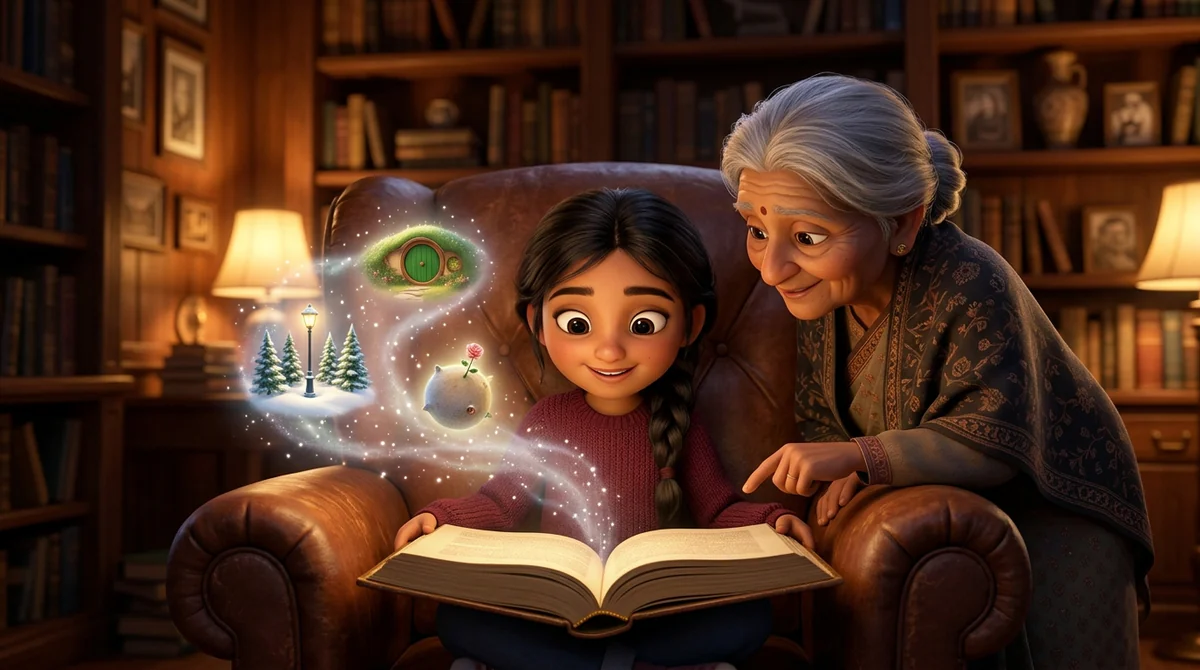
A grandparent gives your ten-year-old a beautiful hardback of a classic, the kind with gold on the spine. Your child opens it, reads the first page, and frowns.
"Why does everyone talk like that?"
The book goes back on the shelf, and stays there. It's a shame, because classics have lasted for a reason. But a classic read at the wrong moment, in the wrong version, can put a child off for years. The right one, at the right time, can become a favourite for life.
In short
- Classics are worth reading, but timing matters more than the title.
- They feel hard because of old-fashioned language, slow openings, long descriptions and unfamiliar settings.
- Three versions exist: abridged (shortened), retold (rewritten in modern words) and original (the full text). Each has its place.
- Read aloud first. A classic shared is far easier than a classic alone.
- Never make it a test. A child who doesn't like a classic yet isn't failing.
Why classics feel hard
The language. Sentences are longer, words have changed meaning, and characters speak in ways that sound stiff or strange today.
The pace. Many older books open slowly, with pages of description before anything happens. Children used to fast modern stories can lose patience before the story gets going.
The setting. Horses and carriages, boarding schools, old money and old manners: a child may need help picturing a world that's gone.
The weight of expectation. "It's a classic" can sound like "it's good for you", which is rarely the best way to sell a book.
Original, abridged or retold?
| Version | What it is | Good for | Watch out for |
|---|---|---|---|
| Original | The full text, as the author wrote it | Confident readers, reading aloud together, older children | Old language and slow parts can stall a younger reader |
| Abridged | The same story, shortened, often with simpler sentences | Meeting a long classic early, building confidence | Some lose much of the author's voice; check the quality |
| Retold | The story rewritten in modern words, often illustrated | First introductions for younger children, reluctant readers | It's a different book; the original is still waiting |
| Graphic novel | The story told in comic form | Visual readers, a quick way into the plot | Much of the text is cut |
There's no wrong choice, as long as you know what you're getting. A retelling at seven and the original at twelve is a lovely way to meet a story twice.
Classics by age
These ages come from publishers and book charities, and they're a guide, not a rule. Many of these work best read aloud first.
| Book | Publisher's age (source) | What to know |
|---|---|---|
| The Little Prince | Interest age 7–11, reading age 8+ (BookTrust) | Simple words, big ideas; the ending is often read as the prince's death |
| Charlotte's Web | 8–12 (Reading Is Fundamental) | A modern classic with short chapters; Charlotte dies near the end |
| Heidi | 8–12 (Penguin Random House, Puffin Classics) | A gentle story in an old-fashioned style; many children meet it as a read-aloud |
| The Lion, the Witch and the Wardrobe | Interest and reading age 9+ (BookTrust) | Short and quick, with a narrator who talks to the reader; a battle and the death of Aslan, who comes back to life |
| The Hobbit | Interest age 8+, reading age 10+ (BookTrust) | Long descriptions and songs; often easier read aloud first |
| Animal Farm | No children's age band (Penguin); written for adults in 1945 | Plain words, but the meaning sits underneath; younger readers may miss the satire |
Wondering whether to start Tolkien with The Hobbit or The Lord of the Rings? See The Hobbit or The Lord of the Rings?
How to help a child into a classic
- Read the first chapters aloud. Slow openings are much easier to get through with your voice carrying them. Hand over once the story takes hold.
- Set the scene first. A few sentences about when and where it's set, or a picture of the place, makes the world easier to imagine.
- Explain a few old words as you go, without stopping the story for every one.
- Let them skim a long description. Adults do it too.
- Try the audiobook alongside the printed book for the harder parts.
- Watch the film afterwards, not before, and talk about what changed. See book or film first?
- Talk about what's different from today: "Would a child be allowed to do that now? Why not?"
When to wait
If a classic has become a battle, put it back on the shelf without fuss. "Let's save this one" keeps the door open. A book that's a struggle at nine may be a delight at twelve. Forcing it now risks your child deciding that classics are boring, full stop.
Give a keen reader someone to talk books with
- Talks through a story
- Writes their own story
- Your report on WhatsApp
Classics from closer to home
Classics aren't only European novels. Stories from the Ramayana, the Mahabharata and the Panchatantra have been told to children for centuries, and many modern retellings are written for young readers. See our guides to Ramayana books for kids, mythology books and Indian books for kids.
By age
| Age | What works |
|---|---|
| 6–8 | Illustrated retellings and modern classics read aloud |
| 9–11 | Shorter originals such as The Lion, the Witch and the Wardrobe, abridged versions of longer ones, more read-alouds |
| 12–14 | Full originals, including books written for adults, read alongside conversation about the history and ideas |
Talking a book through, hard parts and all
In a Bookstaken session, your child reads a real book picked for their interests and talks it through one to one with a trained college mentor on Google Meet. When a book is a stretch, the hard parts become a conversation: what's happening, why a character acts that way, and what they'd have done. At the Review stop, they give their own verdict on the book and defend it. Then they write a story of their own, chapter by chapter.
After every session, you get a report on WhatsApp. The first 60-minute session is free. See how it works.
Questions parents ask
What age should children read the classics?
It depends on the book. BookTrust gives The Little Prince an interest age of 7 to 11, and The Lion, the Witch and the Wardrobe 9 and up. Many classics work earlier as read-alouds or retellings, and later as originals.
Are abridged classics bad for children?
No. A good abridged version can introduce a long story early and build confidence. Check the quality, and remember that the original is a different experience, worth coming back to later.
What classic books should a 10-year-old read?
Good options include Charlotte's Web, Heidi, The Little Prince and The Lion, the Witch and the Wardrobe, all listed by publishers or BookTrust for this age. The Hobbit has a BookTrust reading age of 10 and up and works well read aloud.
Is Animal Farm suitable for children?
George Orwell wrote it for adults, and Penguin publishes it without a children's age band. The words are plain, but the meaning is about a real revolution, so younger readers may follow the animal story and miss the point. Reading it together helps.
Why do children find classic books hard?
Old-fashioned language, slow openings, long descriptions and unfamiliar settings. Reading the first chapters aloud, setting the scene and allowing a little skimming all help.
Sources
- BookTrust. The Little Prince: interest age 7–11, reading age 8+.
- BookTrust. The Lion, the Witch and the Wardrobe: interest and reading age 9+.
- BookTrust. The Hobbit: interest age 8+, reading age 10+.
- Reading Is Fundamental. Charlotte's Web: ages 8–12.
- Penguin Random House. Heidi, Puffin Classics: ages 8–12.
- Penguin. Animal Farm.
More guides on this topic: Reading habits and confidence
Latest Articles
Similar Articles
Want Your Child to Experience Books More Deeply?
Bookstaken pairs kids with caring mentors who turn reading into engaging conversations, inspiring them to eventually write their own stories.
Responses
No responses yet. Be the first to share your thoughts.
Love books yourself? Get paid to read with kids as a Bookbuddy
