How to Get Your Child Reading Independently (When They Still Want You to Read)
The gentle handover from reading to them to reading on their own: shared chapters, first series, audiobooks and quiet reading time.
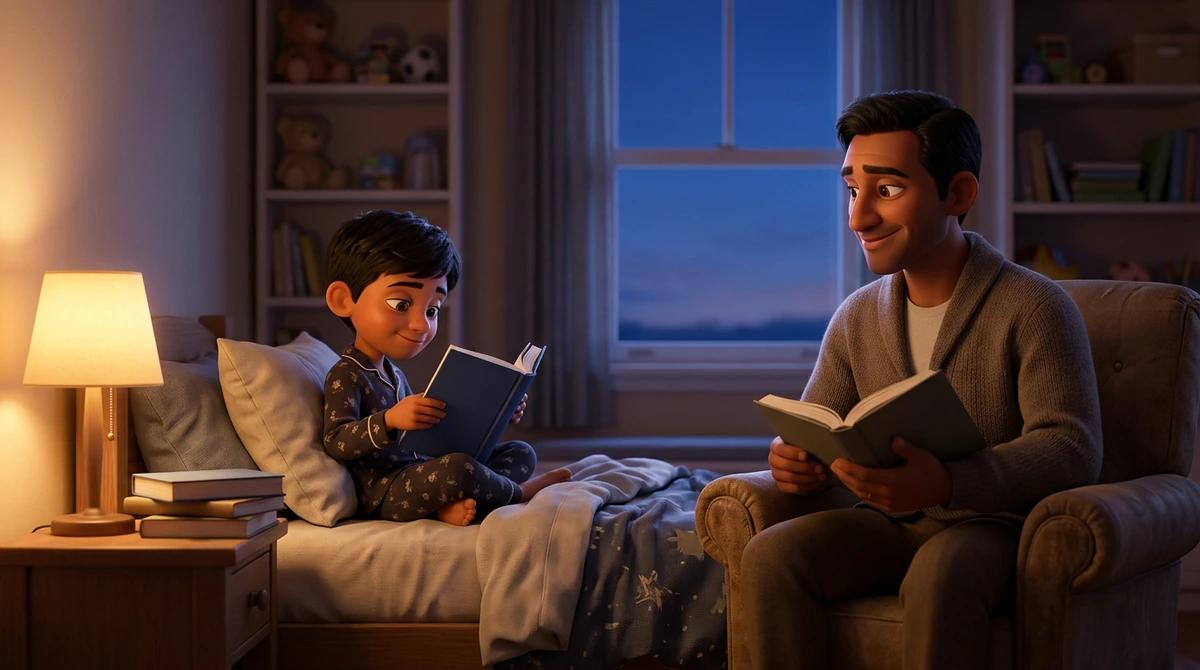
Your eight-year-old's teacher says they read well. They can manage a Magic Tree House book on their own. But every night, the same book lands in your lap.
"You read it."
It's tempting to say no, so they have to. Most parents who try it meet a sulk, a closed book and an early night. Reading on your own is a step of its own, separate from being able to read the words, and it goes best as a gentle handover, not a sudden switch.
In short
- Reading alone is a separate step from being able to read. Many children can read the words well before they want to read on their own.
- Hand over gradually: you read a page, they read a page; you read the first chapter, they read the next.
- Series are stepping stones. Once a child knows the characters, reading alone takes less effort.
- Audiobooks alongside the book can carry them through the harder parts.
- Keep reading aloud too. Stopping read-alouds rarely makes a child read alone; it usually just means less reading.
Why a child who can read still wants you to
It's harder alone. A newer reader is working out the words and following the story at the same time. When you read, they get to enjoy the story without the effort.
It's time with you. The voices, the cuddle and the "one more chapter" are part of the pleasure. Reading alone can feel like losing that.
The books they can read alone are simpler than the ones they love hearing. A child who is gripped by a long adventure at bedtime may find a short early reader a let-down.
They're worried about getting stuck. A hard word with nobody there to help can stop a story cold.
None of this means your child is behind. It means they need a bridge.
Signs your child is ready
- They read short chapter books with few stops.
- They can tell you what happened in a chapter they read.
- They read signs, menus and the backs of cereal boxes without being asked.
- They reread a favourite book on their own.
- They pick up a book in a quiet moment, even for a few minutes.
The handover, step by step
1. Take turns
You read a page, they read a page. For a newer reader, take turns by paragraph. It shares the effort and keeps the story moving.
2. You start, they finish
Read the first part of the chapter aloud until the story takes hold, then hand the book over: "I wonder what happens when they open the door. You read the rest and tell me."
3. Stop at a cliffhanger
End your reading at the most exciting moment, and leave the book with them. Curiosity is the best reason there is to read on alone.
4. Read the same book separately
They read a chapter during the day; you read it too, or ask about it at bedtime. The conversation keeps the shared part alive while the reading becomes theirs.
5. Quiet reading time, side by side
Ten or fifteen minutes when everyone in the house reads their own book, in the same room. Your child reads alone, but not on their own.
6. Two books on the go
Keep a harder book you read together and an easier one they read alone. The shared book keeps them stretched; the solo book builds confidence.
Series are stepping stones
The first book in a series is the hardest: new characters, a new world, a new style. By book three, a child knows what to expect, and reading alone takes far less effort.
Good first series to read alone include:
- Magic Tree House: short chapter books of about 70 to 80 pages, with a picture every few pages. Penguin Random House lists the first book for ages 6 to 9.
- Geronimo Stilton: colourful words in different fonts and a picture on most pages. Scholastic lists the first book for ages 7 to 10.
- Big Nate: short text chapters mixed with comic strips. Reading Is Fundamental lists it for ages 8 to 12.
For when your child is ready for longer books, see when to move from picture books to chapter books.
Audiobooks alongside the book
Listening to the audiobook while following the printed page helps a child keep up with a story that's slightly beyond them. Another approach: listen to the first few chapters together, then let them read the rest. Listening counts as reading too; see do audiobooks count as reading?
Make reading the part of the week they look forward to
- Talks through a story
- Writes their own story
- Your report on WhatsApp
Keep reading aloud
The handover isn't a reason to stop. Reading aloud lets your child enjoy books above the level they can manage alone, hear new words and keep the habit warm. The National Literacy Trust found that just 1 in 3 children aged 8 to 18 (32.7%) enjoyed reading in their free time in 2025, so anything that keeps reading enjoyable is worth protecting.
A simple rule: read aloud the books that are a stretch, and let them read alone the books that are comfortable. Our guide to reading aloud has ideas for older children too.
What gets in the way
- Books that are too hard. If every page is a struggle, reading alone will feel like a test. See how to know if a book is too easy or too hard.
- Pressure. Timers, logs and "you have to read alone now" can turn it into a chore. Our guide to motivating children to read without rewards explains why.
- No regular time. Reading alone grows when it has a place in the day, such as after the school snack or before lights out. See how to build a reading habit.
- A screen within reach. A book can't compete with a tablet in the same hand. Keep quiet reading time screen-free.
By age
| Age | What helps |
|---|---|
| 5–6 | Taking turns by line or page, simple early readers, plenty of reading aloud |
| 7–8 | A first series, "you start, they finish", short quiet reading times |
| 9–11 | Longer series, their own reading time each day, talking about what they read, harder books read aloud |
| 12–14 | Their own choices, talk rather than tests, sharing books you've both read |
A reading partner who isn't you
In a Bookstaken session, your child reads their own physical copy of a real book picked for their interests, and talks it through one to one with a trained college mentor on Google Meet. Between sessions, a short reading quest keeps the book going, so the reading in between is theirs. Most children finish a book in four to six sessions.
After every session, you get a report on WhatsApp: what they read, what they talked about and how they're growing. The first 60-minute session is free. See how it works.
Questions parents ask
At what age should a child read independently?
There's no fixed age. It depends on when reading the words becomes easy enough to enjoy the story. Magic Tree House, a common first series to read alone, is listed by Penguin Random House for ages 6 to 9.
Should I stop reading aloud so my child reads on their own?
No. Keep reading aloud the books that are a stretch, and hand over the comfortable ones. Stopping read-alouds usually means less reading, not more independent reading.
How do I get my child to read on their own?
Hand over gradually: take turns by page, read the first part of a chapter and let them finish it, stop at cliffhangers, and set up a quiet reading time when everyone reads their own book.
My child can read but won't read alone. Why?
Often because reading alone is still hard work, the books they can manage feel babyish, or they miss reading time with you. A first series, an audiobook alongside the book and shared quiet time all help.
How long should independent reading be?
Start with ten minutes and let it grow. A few minutes most days does more than a long session once a week.
Sources
- National Literacy Trust (2025). Children and young people's reading in 2025.
- Penguin Random House. Dinosaurs Before Dark (Magic Tree House 1): ages 6–9.
- Scholastic. Geronimo Stilton: Lost Treasure of the Emerald Eye: ages 7–10.
- Reading Is Fundamental. Big Nate: In a Class by Himself: ages 8–12.
More guides on this topic: Reading habits and confidence
Latest Articles
Similar Articles
Want Your Child to Experience Books More Deeply?
Bookstaken pairs kids with caring mentors who turn reading into engaging conversations, inspiring them to eventually write their own stories.
Responses
No responses yet. Be the first to share your thoughts.
Love books yourself? Get paid to read with kids as a Bookbuddy
