Opinion Writing for Kids: How to Argue a Point, With Examples by Age
A simple five-part shape (opinion, reasons, an example, the other side and a conclusion), sentence starters, sample paragraphs for ages 7 to 14, and topics children actually care about.
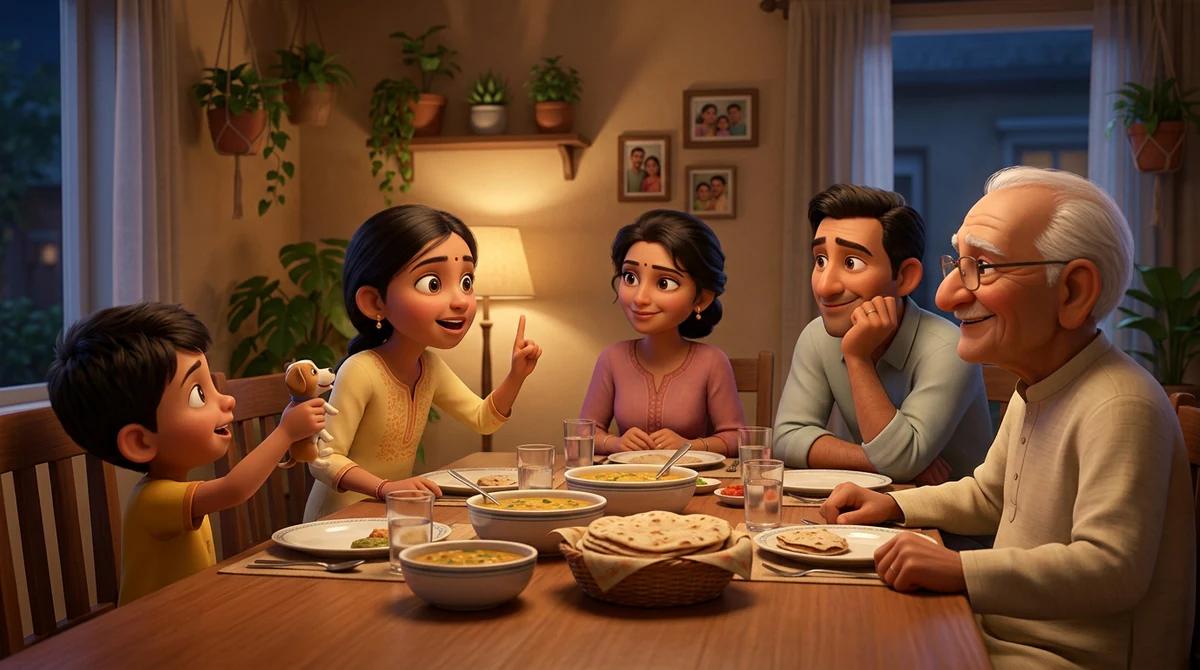
"We should get a dog. Dogs are friendly, they make you go outside, and I'd walk it every day. Riya has one."
Your child has just made an argument: an opinion, three reasons and an example. They do it all the time, about bedtimes, screen time and what's for dinner.
Opinion writing is just that, on paper. Here's a simple shape that works at any age, with examples to show what good looks like.
In short
- Opinion writing says what you think, and why.
- Use five parts: your opinion, your reasons, an example, the other side and a conclusion.
- Start out loud. Arguing at the dinner table is the best practice there is.
- Pick topics they care about, not ones they've never thought about.
- A book review is opinion writing, and a great place to start.
Opinion, persuasive or argument?
| Type | What it does | Usually for |
|---|---|---|
| Opinion writing | Says what I think and why | Younger children, about ages 7 to 10 |
| Persuasive writing | Tries to make the reader agree, or do something | Ages 9 to 12 |
| Argument (or discursive) writing | Weighs both sides with evidence, then decides | Ages 11 to 14 |
Schools use these names in different ways, so check what your child's teacher means. The shape below works for all three; older children just do more with each part.
The five-part shape
| Part | What it does | Sentence starters |
|---|---|---|
| 1. Opinion | Says clearly what you think | "I think...", "In my opinion...", "I believe..." |
| 2. Reasons | Gives two or three reasons | "One reason is...", "Also...", "Most importantly..." |
| 3. Example | Backs a reason up with something real | "For example...", "When I...", "In the book..." |
| 4. The other side | Shows you've thought about what others say | "Some people think... but...", "It's true that... however..." |
| 5. Conclusion | Says your opinion again, more strongly | "That's why...", "So, overall..." |
Younger children can skip part 4 at first. Older children should never skip it: answering the other side is what makes an argument convincing.
Sample paragraphs by age
Ages 7 to 8
Dogs are the best pets. One reason is that they are friendly and they love you. Another reason is that they make you go outside and play. My cousin's dog runs to the door when she gets home from school. That's why I think everyone should have a dog.
Opinion, two reasons, an example and a conclusion. That's plenty at this age.
Ages 9 to 11
I think homework should be shorter on weekdays. Firstly, children are tired after a long day at school, and tired brains don't learn well. Secondly, we need time to play, read and help at home. For example, on days when I have lots of homework, I don't get to read my book at all. Some people say homework helps us practise, and that's true. But twenty minutes of practice can be just as useful as an hour. That's why I believe homework should be shorter on weekdays.
The writer answers the other side ("Some people say...") instead of ignoring it.
Ages 12 to 14
Should phones be allowed in school? I believe they should be kept in lockers during lessons, but allowed at lunch. Phones in class are a distraction: a single notification can pull a student's attention away from the lesson. They can also make it easier to be unkind to classmates without a teacher seeing. Supporters of phones in school argue that they are useful for research and for emergencies, and they have a point. However, school computers can be used for research, and the school office can contact families quickly. A locker rule keeps the benefits while removing the distraction. On balance, phones should stay in lockers during lessons.
At this age, the writer takes a more careful position, weighs both sides and ends with a balanced conclusion.
Topics children actually care about
- Should children have a bedtime at the weekend?
- Are dogs better than cats?
- Should homework be banned?
- Should children be allowed phones at 10?
- Is it better to read the book or watch the film first?
- Should school start later?
- Should every child learn to cook?
- Are video games good for children?
- Should zoos exist?
- Was the ending of [your child's book] fair?
- Which is the best book in a series?
- Should the main character have made a different choice?
- Should children choose their own clothes for school?
- Is it better to be the oldest or the youngest?
- Should the school holidays be longer?
Opinions about books
Some of the best opinion writing is about stories: "Was the ending fair?", "Was the villain really bad?", "Should Charlotte have helped Wilbur?" Children have strong views about the books they love, and they can find their examples right there on the page. See how to write a book review, questions to ask your child about a book and how to teach critical thinking to kids.
Hear what your child really thinks about a story
- Talks through a story
- Writes their own story
- Your report on WhatsApp
Common mistakes, and fixes
| Mistake | Fix |
|---|---|
| No reasons, just "because I like it" | Ask "Why?" twice. The second answer is usually the real reason |
| "I think" in every sentence | Say it once at the start and once at the end |
| Reasons with no examples | Ask "When has that happened?" |
| Ignoring the other side (older children) | Ask "What would someone who disagrees say?" |
| An ending that just stops | Finish by saying the opinion again, more strongly |
Practise out loud first
- The dinner-table debate. Pick a silly topic: "Is cereal soup?" Each person gives one reason.
- Switch sides. Argue for the side you disagree with. It builds the "other side" muscle.
- The one-minute case. Your child has a minute to persuade you of something. Then write it down.
Talking first makes writing easier, especially for children who freeze at a blank page. For more on writing at home, see how to improve your child's writing skills.
By age
| Age | What works |
|---|---|
| 7–8 | Opinion plus two reasons, said out loud first, then three or four written sentences |
| 9–11 | All five parts, real examples, persuasive letters (to the head teacher, to a grandparent) |
| 12–14 | Both sides with evidence, a careful position, essays and speeches, opinions about books and the news |
Their own verdict, every session
In a Bookstaken session, your child reads a real book picked for their interests and talks it through one to one with a trained college mentor on Google Meet. At the Review stop, they give their own verdict on the book and back it up with reasons. Then they write a story of their own, chapter by chapter.
After every session, you get a report on WhatsApp. The first 60-minute session is free. See how it works.
Questions parents ask
What is opinion writing for kids?
Writing that says what the child thinks about something and why. A simple shape is: opinion, reasons, an example, the other side and a conclusion.
What is the difference between opinion and persuasive writing?
Opinion writing explains what you think. Persuasive writing tries to make the reader agree or act. Argument writing, for older children, weighs both sides with evidence. Schools use the names differently, so check with the teacher.
How do I teach my child opinion writing?
Start out loud: ask what they think and why, then ask for an example. Then help them write it in the five-part shape, using sentence starters such as "I think...", "One reason is..." and "For example...".
What are good opinion writing topics for kids?
Topics they already have views on: pets, bedtimes, homework, phones, school holidays, and the books they've read. "Was the ending fair?" is a great one.
How long should an opinion paragraph be?
For ages 7 to 8, four or five sentences. For ages 9 to 11, a paragraph of six to eight sentences with all five parts. Older children write several paragraphs. Always follow your school's guidance.
More guides on this topic: Focus and learning
Latest Articles
Similar Articles
Want Your Child to Experience Books More Deeply?
Bookstaken pairs kids with caring mentors who turn reading into engaging conversations, inspiring them to eventually write their own stories.
Responses
No responses yet. Be the first to share your thoughts.
Love books yourself? Get paid to read with kids as a Bookbuddy
