Ten questions about level, understanding, enjoyment and home reading, how to make five minutes at a parent-teacher meeting count, and what to do afterwards.
Why children say "fine", 40 questions sorted by the moment, and the listening moves that keep them talking.

Why a mentor matters, where to find one, the safety checks to insist on, and the questions to ask before your child's first session.

Free time, open-ended materials, "what if" questions, finishing their own ideas, and books as raw material for stories.
A simple five-part shape (opinion, reasons, an example, the other side and a conclusion), sentence starters, sample paragraphs for ages 7 to 14, and topics children actually care about.

How to explain AI to a child of 6, 10 or 14, five things every child should know about it, activities to try together, what to say about AI "friends", and how to answer big worries calmly.
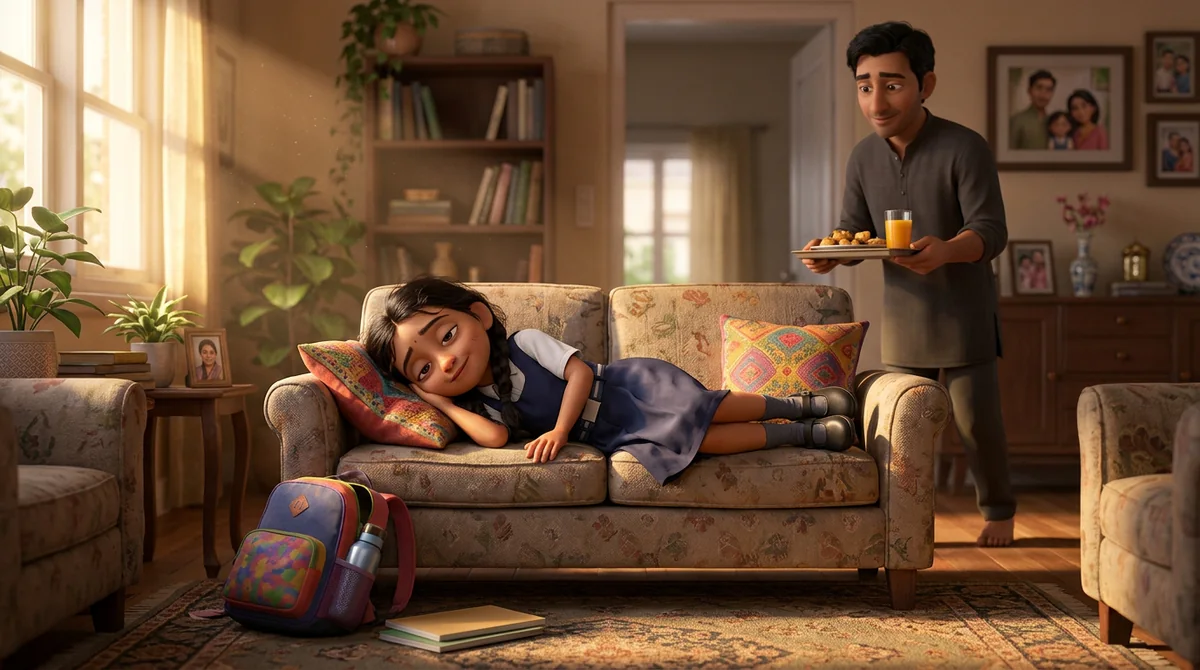
Good all day at school, then tears and slammed doors at home. What after-school restraint collapse is, why it happens, and a calm plan for the first hour home.
Why some children read every word but can't tell you what happened, and seven calm ways to build understanding at home, from picturing the story to retelling it.

India's reading targets for Classes 1 to 3, what surveys show children actually manage, signs worth raising with the teacher, and what helps at home.

Classes, tuition, sport and music can leave a child with no time to just be a child. The signs of an overscheduled child, how to decide what stays, and how much free time children need.