Children's Book Awards Explained: Newbery, Carnegie and More
What each award is for and who picks the winners, award winners children actually enjoy (with ages from named sources), and how to use award lists without being ruled by them.
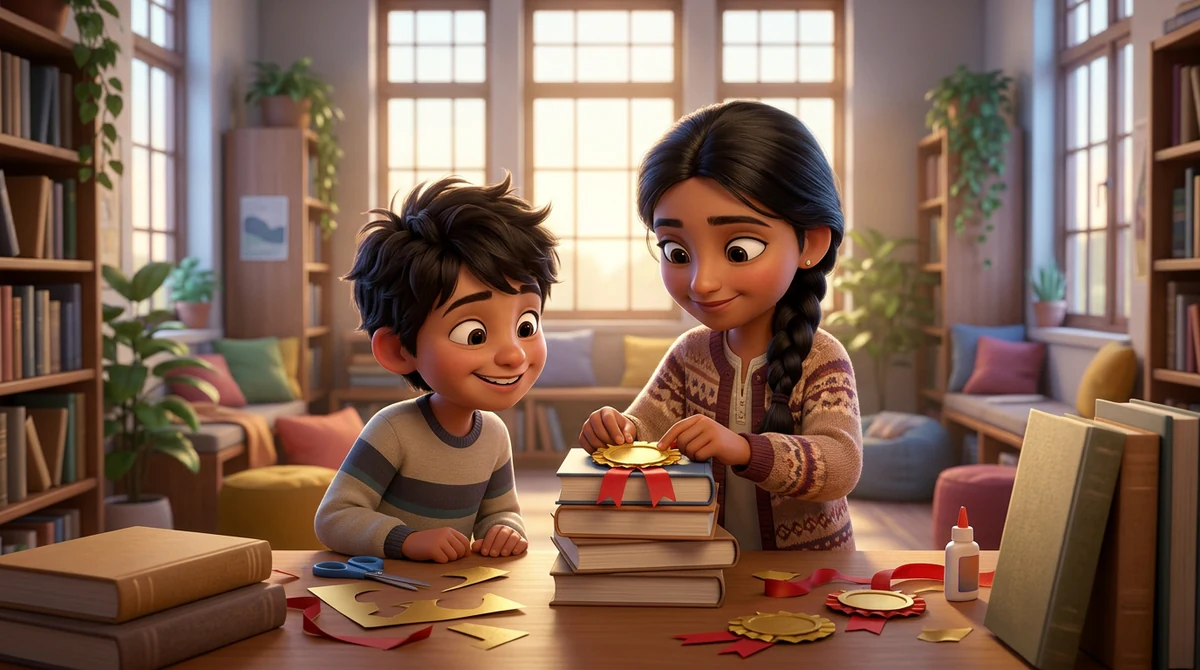
There's a shiny gold sticker on the cover: "Newbery Medal Winner". You buy it for your ten-year-old, sure it must be good.
Three chapters in, they've stopped reading.
Book awards can be a great way to find excellent books. But a medal tells you what the judges thought, not what your child will love. Here's what the main awards mean, who decides them, and which winners children tend to enjoy.
In short
- The Newbery Medal (US, first approved in 1922) goes to the author of "the most distinguished contribution to American literature for children". Children's librarians pick it.
- The Carnegie Medals (UK) are judged solely by children's librarians. The Medal for Writing dates from 1936; the Medal for Illustration, once called the Kate Greenaway Medal, from 1955.
- India's Bal Sahitya Puraskar, from the Sahitya Akademi, has honoured children's writers in 24 languages since 2010.
- An award means excellent, not easy or fun. Many winners deal with serious subjects.
- Children vote too. The Carnegies' Shadowers' Choice Awards are picked by young readers.
The main awards at a glance
| Award | Where | What it's for | Who picks |
|---|---|---|---|
| Newbery Medal | US | The author of the most distinguished children's book of the year | Children's librarians, through the Association for Library Service to Children (part of the American Library Association) |
| Caldecott Medal | US | The illustrator of the most distinguished American picture book | The same association |
| Michael L. Printz Award | US | The best book written for teens | Young-adult librarians, through the American Library Association |
| Carnegie Medal for Writing | UK | An outstanding book written in English for children and young people | Children's librarians |
| Carnegie Medal for Illustration | UK | Outstanding illustration in a book for children | Children's librarians |
| Bal Sahitya Puraskar | India | Writers of children's literature in 22 Indian languages plus English and Rajasthani | The Sahitya Akademi, India's national academy of letters |
The Carnegie Medal was first given to Arthur Ransome for Pigeon Post. Each year in the UK, children in schools and libraries also "shadow" the shortlist: they read the books, talk about them and vote for their own winners.
Medals and Honors
Each year the Newbery committee names one Medal winner and usually several Honor books, which are the runners-up. Some of the best-loved children's books were Honor books rather than winners: Charlotte's Web was a Newbery Honor book in 1953, and Hatchet in 1988.
Award winners children actually enjoy
| Book | Award | Age (source) | Why children like it |
|---|---|---|---|
| New Kid | Newbery Medal 2020, the first graphic novel to win | 8–12 (Publishers Weekly) | A funny, true-feeling comic about starting at a new school |
| The Crossover | Newbery Medal 2015 | Interest age 10–14, reading age 9+ (BookTrust) | Basketball and brothers, told in fast, punchy poems |
| Holes | Newbery Medal 1999 | 10 and up (Penguin Random House) | A mystery, a curse and a camp where boys dig holes all day |
| The Girl Who Drank the Moon | Newbery Medal 2017 | 10–14 (Hachette) | A witch, a baby filled with magic and a tiny dragon |
| When You Reach Me | Newbery Medal 2010 | Bookstaken's catalogue suggests 10–14 | Mysterious notes, New York, and a puzzle about time |
| Number the Stars | Newbery Medal 1990 | 10–12 (Reading Is Fundamental) | A girl helps her Jewish friend escape during the Second World War |
| The Graveyard Book | Newbery Medal 2009, Carnegie Medal 2010 | Catalogue suggests 8–12 | A boy raised by ghosts; it opens with the killing of his family, told quietly |
| Last Stop on Market Street | Newbery Medal 2016, a rare picture book to win | Interest age 4–6, reading age 5+ (BookTrust) | A bus ride with a grandmother who sees beauty everywhere |
From the Carnegie lists, A Monster Calls (2012) and Northern Lights (1995) are both much loved. BookTrust gives A Monster Calls an interest age of 11 to 14; it's about a boy whose mother is very ill, so it's one to read with care. Northern Lights has an interest age of 9 to 14 and a reading age of 10+.
How to use award lists
- Treat them as a starting point, not a reading list to get through.
- Check the age and the subject. Many winners deal with war, illness or loss. That can make for great conversations, and it can also be a lot for a sensitive child.
- Read the first chapter together. If it doesn't grab them, it's fine to try another.
- Look at the shortlists and Honor books as well as the winners. There's more choice, and some will suit your child better.
- Mix them with books your child chooses. A comic they love is worth more than a medal winner they don't finish.
Awards in India
The Sahitya Akademi's Bal Sahitya Puraskar is given each year to children's writers in many Indian languages, which makes it a good place to look for books in your home language. See our Indian language books for kids and Indian books for kids.
A free 1:1 reading session for your child
- Talks through a story
- Writes their own story
- Your report on WhatsApp
Make your own award
Children love judging. Once your child has read a few books, ask them to pick a winner and explain why: the best ending, the funniest character, the book they'd give a medal to. It's opinion writing without the worksheet. See opinion writing for kids and how to write a book review.
By age
| Age | What works |
|---|---|
| 6–8 | Picture-book winners such as Last Stop on Market Street, read aloud, and talking about the pictures |
| 9–11 | Lighter winners such as New Kid, Holes and The Girl Who Drank the Moon, and judging their own awards |
| 12–14 | Serious winners such as Number the Stars and A Monster Calls, read with time to talk, plus the teen awards |
Their own verdict, one to one
In a Bookstaken session, your child reads a real book picked for their interests and talks it through one to one with a trained college mentor on Google Meet. At the Review stop, they give their own verdict on the book, and why. Would they have given it a medal? Then they write a story of their own, chapter by chapter.
After every session, you get a report on WhatsApp. The first 60-minute session is free. See how it works.
Questions parents ask
What is the Newbery Medal?
An American award, first approved in 1922 and given by the Association for Library Service to Children, part of the American Library Association. It goes to the author of "the most distinguished contribution to American literature for children" each year.
What is the Carnegie Medal?
The UK's best-known children's book award, judged solely by children's librarians. The Medal for Writing began in 1936. A second medal, for illustration and once called the Kate Greenaway Medal, began in 1955.
What's the difference between a Newbery Medal and a Newbery Honor?
The Medal goes to one book each year. Honor books are the runners-up, and there are usually several. Charlotte's Web and Hatchet were both Honor books.
Are award-winning books good for kids?
They're usually very well written, but not always easy or light. Many deal with serious subjects. Check the age and subject, read the first chapter together, and don't worry if a winner doesn't suit your child.
Which award-winning books are good for a 10-year-old?
Holes (Penguin Random House lists it for 10 and up), The Girl Who Drank the Moon (Hachette, 10 to 14) and New Kid (Publishers Weekly, 8 to 12) are good places to start.
Sources
- American Library Association. About the Newbery Medal and Newbery Medal winners and Honor books, 1922 to the present.
- The Carnegies. About the awards, history of the medals and Medal for Writing winners.
- School Library Journal (2020). Jerry Craft breaks barriers with historic 2020 Newbery win.
- Wikipedia. Bal Sahitya Puraskar, Caldecott Medal, Michael L. Printz Award.
- Publishers Weekly. New Kid: ages 8–12.
- BookTrust: The Crossover, Last Stop on Market Street, A Monster Calls, Northern Lights.
- Penguin Random House. Holes: ages 10 and up.
- Hachette. The Girl Who Drank the Moon: ages 10–14.
- Reading Is Fundamental. Number the Stars: ages 10–12.
More guides on this topic: Reading habits and confidence
Latest Articles
Similar Articles
Want Your Child to Experience Books More Deeply?
Bookstaken pairs kids with caring mentors who turn reading into engaging conversations, inspiring them to eventually write their own stories.
Responses
No responses yet. Be the first to share your thoughts.
Love books yourself? Get paid to read with kids as a Bookbuddy
