Five questions that turn "It was good" into a review someone would want to read.
Listening builds the understanding side of reading, not the decoding side. How to use audiobooks so they help your child's reading instead of replacing it.
Prompts about me, feelings, good things, what-ifs, story starters and books, with how to start a journal and keep it going.
Eight benefits with real evidence behind them, how strong each one is, and the kind of reading that brings them.
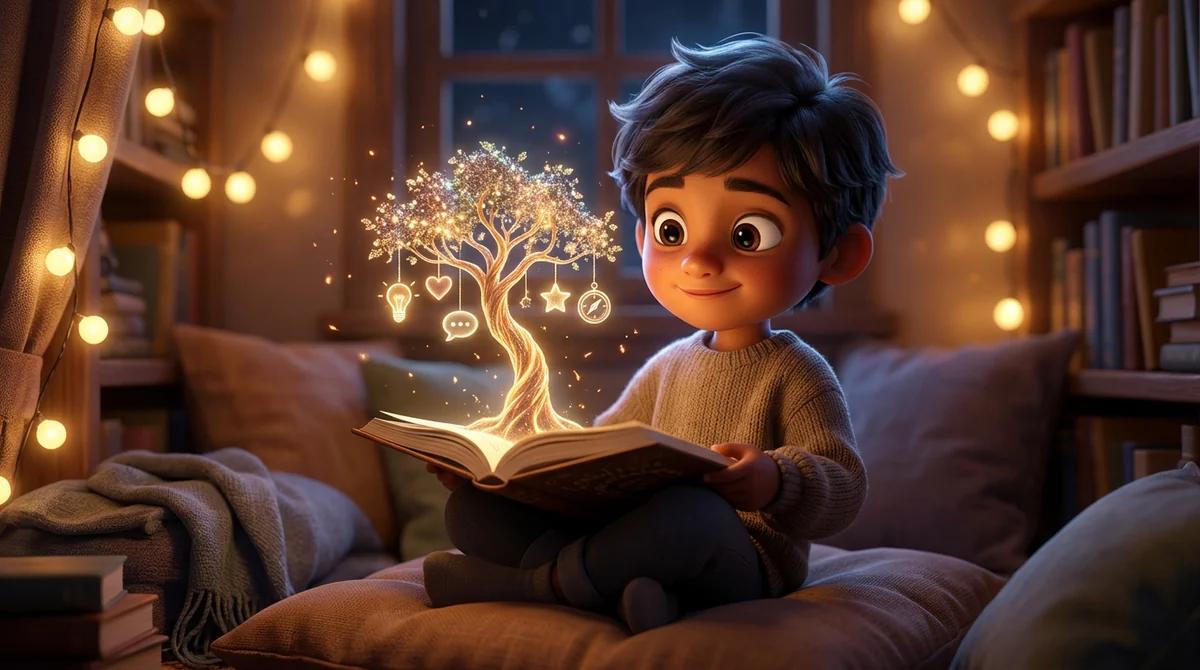
One kind of book a month, chosen by your child. Book ideas for every month, a family version and a harder version for keen readers.
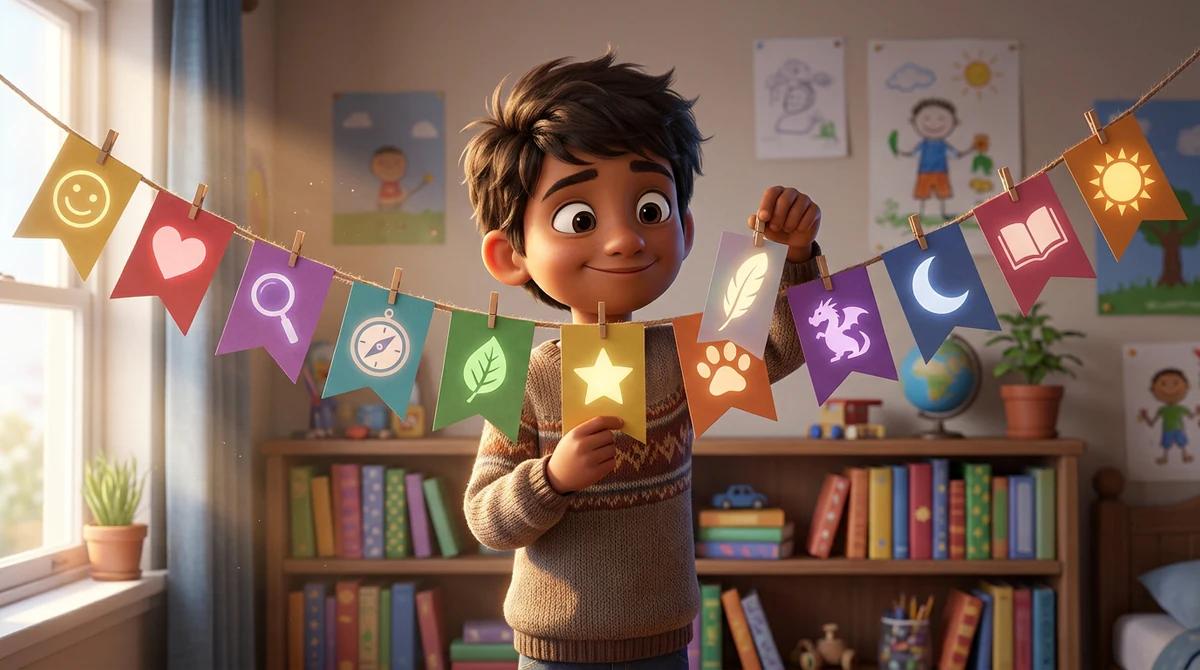
What a study of mandatory reading logs found, why rewards for reading can backfire, how to handle a log the school sets, and lighter ways to notice your child's reading.
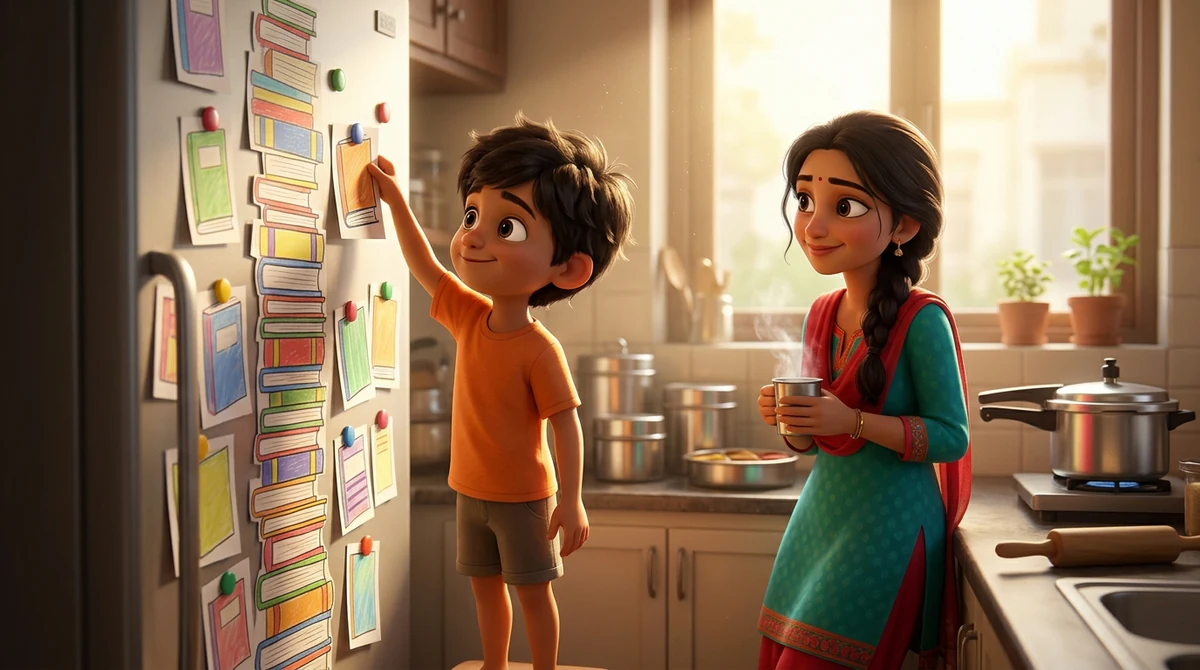
The story format most schools ask for (title, beginning, problem, ending), worked examples for Classes 2 to 8, writing from an outline, and what to do when your child is stuck.
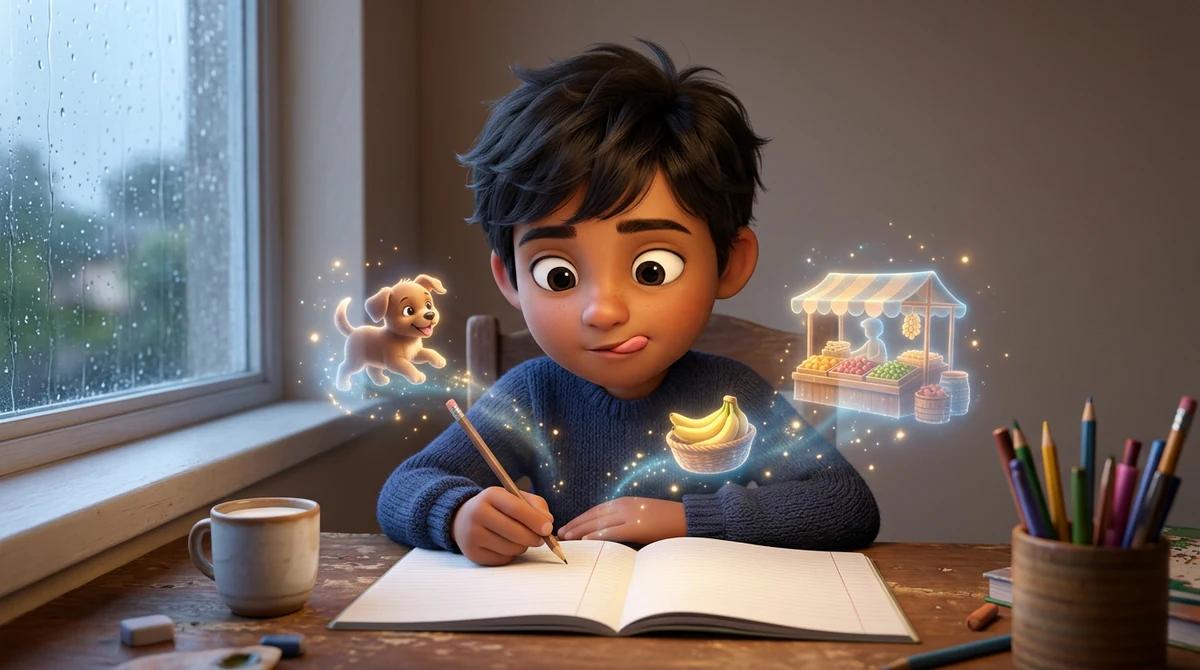
Twenty ideas that make reading cosier, more their own and easier to share, with a quick guide by age and budget.
A simple shape for any story, how to use voice and pauses, bedtime stories you make up together, and getting ready for a school storytelling competition.
Comics and graphic novels are real reading. What the research says about how they build inference and vocabulary, and how to move from comics to longer books without taking the comics away.